The light of all lights
Berwick Church
All things were made by Him;
and without Him was not anything made that was made.
In Him was life; and the life was the light of men.
—John 1:3–4
IN NOVEMBER 1939, World War II having already been unleashed on Europe only two months prior, George Bell, Bishop of Chichester (1929–58), sat down and wrote a preliminary draft paper titled, “Artists and the Church in War Time”, outlining his thoughts on the role of art in a society traumatized by conflict. A poet in his own right, he intuitively understood the way in which the religious life of a community could be linked with the creative spirit of contemporary art, the Church itself being a natural environment for the expression of mystical experience.
Bloomsbury Group artists Duncan Grant, Vanessa Bell (no relation and sister of Virginia Woolf) and her son Quentin, who were at the time all living together in a bohemian collective at Charleston farmhouse in Firle, were thereby commissioned by the bishop to paint the internal walls of St Michael and All Angels, an ancient rural parish church dating back to the 11th/12th century situated in neighbouring Berwick, East Sussex, in the south-east of England.
… Artists are exceptionally hard hit by the war. And yet it is more important than ever to keep the arts alive, with all that they represent, in times like these. In days not less unsettled long ago, the Church offered all manner of opportunities to the Artist—the sculptor, the painter, the craftsman as well as the architect. The evidence of their genius and their skill is to be found in the Churches and the Cathedrals all over England. Could not the Church, as part of its sense of inestimable value of spiritual things, renew its association with the Artists of different kinds today? By such a re-association it would do much, not only for the Artists but for the community as a whole. What is needed is a lead. It is important to begin. Even small beginnings help, and small beginnings may well point the way to larger efforts.
—Bishop George Bell, quoted in Peter Blee, Berwick Church & The Bloomsbury Group
The sentiments of T. S. Eliot’s “Notes Towards the Definition of Culture” in which the Modernist poet states that “the culture of Europe could not survive the complete disappearance of the Christian faith … If Christianity goes, the whole of our culture goes,” were not wasted on the bishop. Indeed, he was only too acutely aware that in allowing contemporary artists to paint Berwick Church, he was essentially preserving the very foundations of Western civilization itself.
Speaking at a conference in 1944 titled “The Church and the Arts” at his episcopal seat in Chichester after the completion of the first phase of paintings, Bishop Bell expressed his passionate belief for the project:
It is a common-place that we are living now in the midst of a great spiritual crisis. I believe that the Church and the Artist together have a big contribution to make to mankind, not least England, in relation to it. What we all need, what the world needs, is Order, a Pattern, a sense of purpose, a Philosophy, a Faith. The Church as a Faith and the Artist with his vision have the genius and the capacity to mediate Order and to represent that Faith. Certainly, the Church needs the Arts very badly … I want to see Art playing a much larger part in people’s lives and I also want to see religion making a much larger contribution to the tradition and atmosphere in which people live.
—Bishop George Bell, quoted in Peter Blee, Berwick Church & The Bloomsbury Group
Despite the fact that Duncan, Vanessa and Quentin were all atheists, they threw themselves wholeheartedly into the task, producing a fusion of traditional and modernist scenes from nature (the Four Seasons and pulpit panels), as well as the Scriptures (the Nativity, the Annunciation, the Sacraments), with Vanessa declaring, “… on the whole we accept every suggestion and read our Bibles diligently.” In a sermon of October 1943 to commemorate the progress of the work, Bishop Bell remarked that the paintings were a “call to worship—a call to adore”.
Participating with their unique styles to the decorative schema of the church’s interior, it is the contribution of Duncan Grant (21st January 1885–8th May 1978), as lead artist, that captures my attention the most. An only child born in Scotland, he spent his formative years growing up in India and Burma where his father served as an army officer, returning at the age of nine to board at Rugby School, where his art teacher introduced him to the work of Pre-Raphaelite painter, Edward Burne-Jones. And yet, it would be after his confirmation and while a student at the Westminster School of Art that Duncan appears to have had a profound mystical encounter:
I was painting with orange, yellow and crimson. I was working from the window of my small bedroom looking down the village street of Streatleigh on the Thames in Berkshire. I must have reached the age of 17 … I remember having a sort of visionary experience, I can only call it that because it had a curiously objective outside-of-myself sort of character. ‘You must go out into the world,’ my inner voice said, ‘and learn all that there is to know and be seen in the world of painting. The impressionists you must see and learn from and then there are other things going on at this very moment of which you know nothing.’ I realized that all this was true and made up my mind to follow the advice of this inner voice.
—Duncan Grant, quoted in Peter Blee, Berwick Church & The Bloomsbury Group
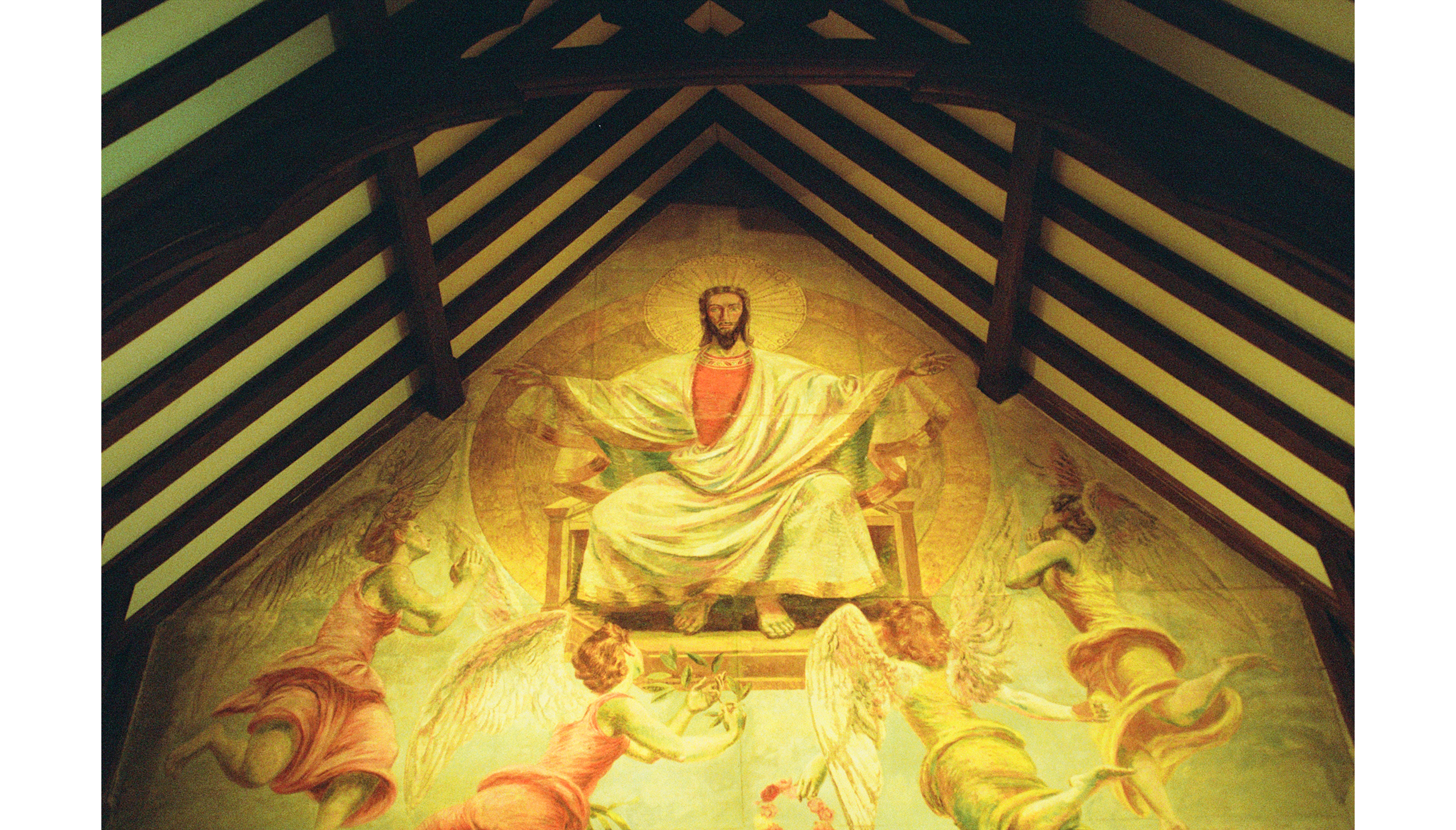
Duncan’s inner voice would eventually lead him to execute one of the most outstanding paintings of his entire artistic career, Christ in Glory, which forms the centrepiece of Berwick Church. No doubt, he would have taken inspiration from his days in India and the rich, exotic shapes and colours that dominate Asian painting, borne out by the upper design being centred around a golden circle in a manner similar to a Buddhist mandala.
Similarly, the head of Duncan’s Christ clearly displays similarities to the spirit of Byzantine iconography, with the enlarged forehead denoting a heightened intellect, which in the Eastern Orthodox Christian tradition is given supreme importance over and above all other aspects of the human psyche, rendering Jesus the personification of an enlightened sage.
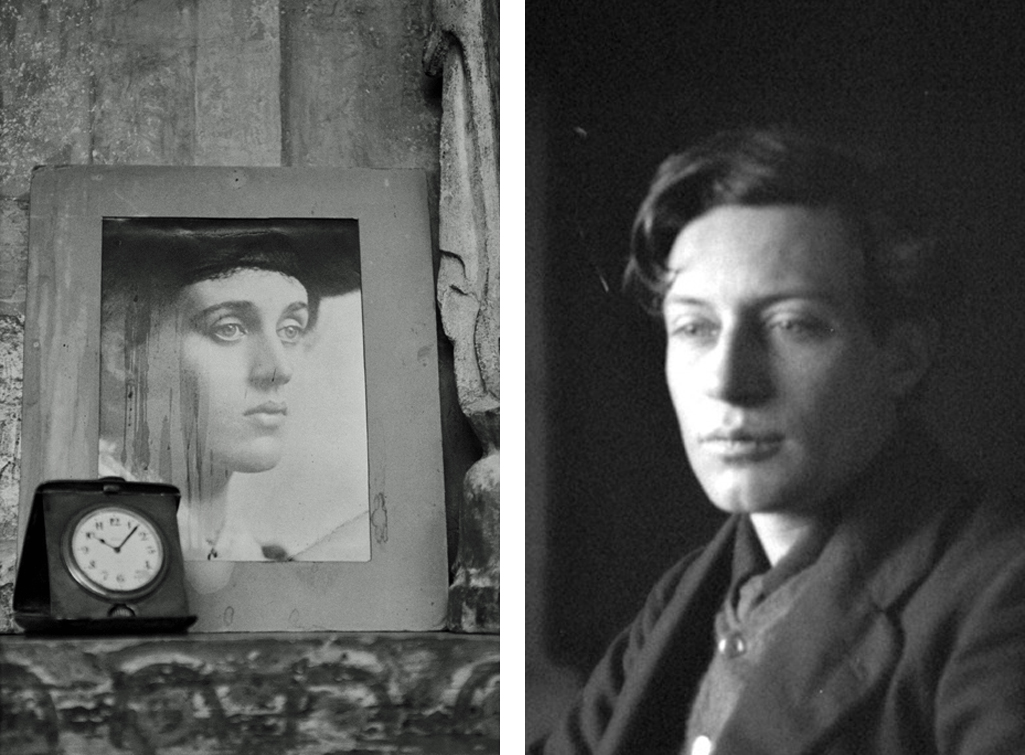
Truly, I could gaze at Duncan’s masterpiece for many long hours, lost in the Saviour’s outstretched arms, his regard acting as a centripetal force, mesmerizing me simply with the pull of his radiant eyes. As an aside and rather amusingly, if one looks closely enough, even from the pews several metres below, it is possible to see a distinct likeness to Duncan himself, leaving one only to imagine his reasons for segueing Christ’s facial features into his own.
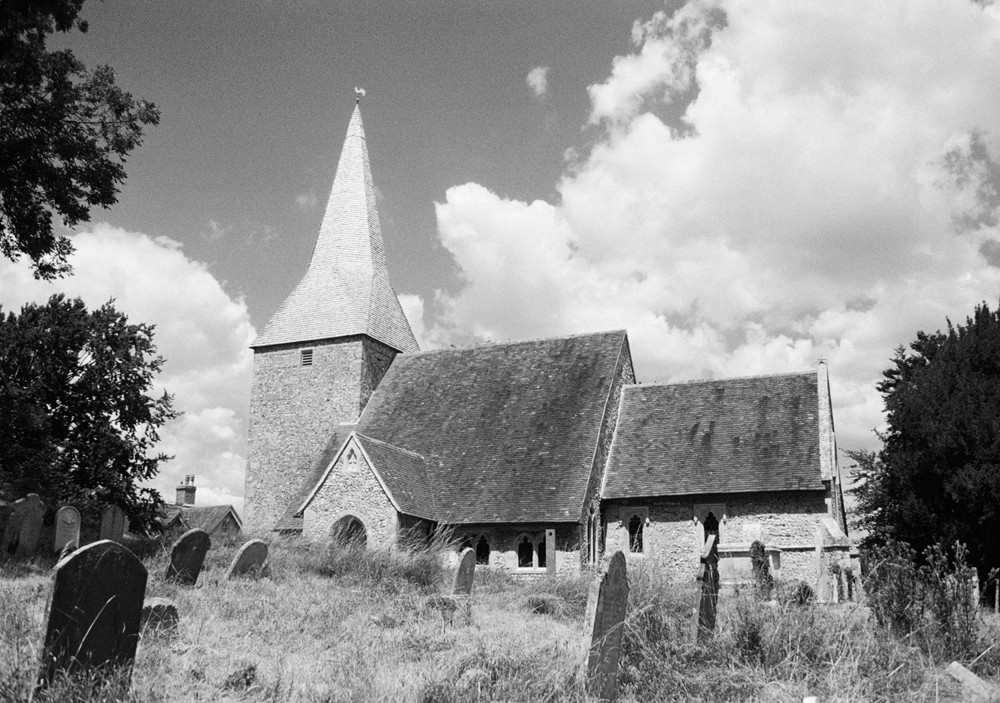
On this mid-July day of my visit, the ambiance of Berwick Church is akin to a Renaissance chapel bathed in Mediterranean sunshine. Despite its relatively small architectural scale, there is a sense of luminosity and spaciousness as I am seemingly transported to another clime.
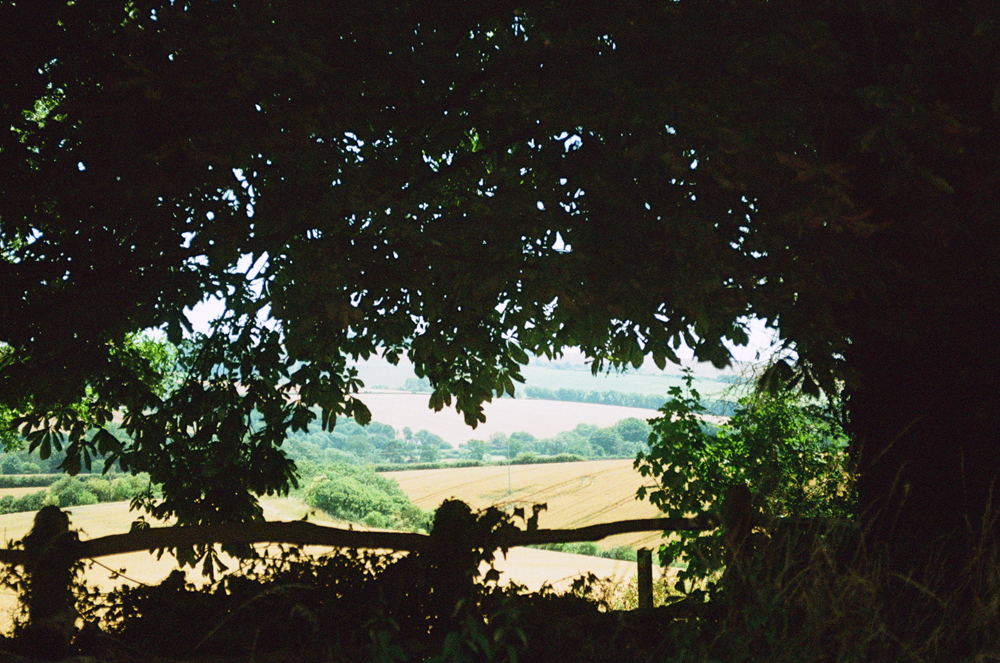
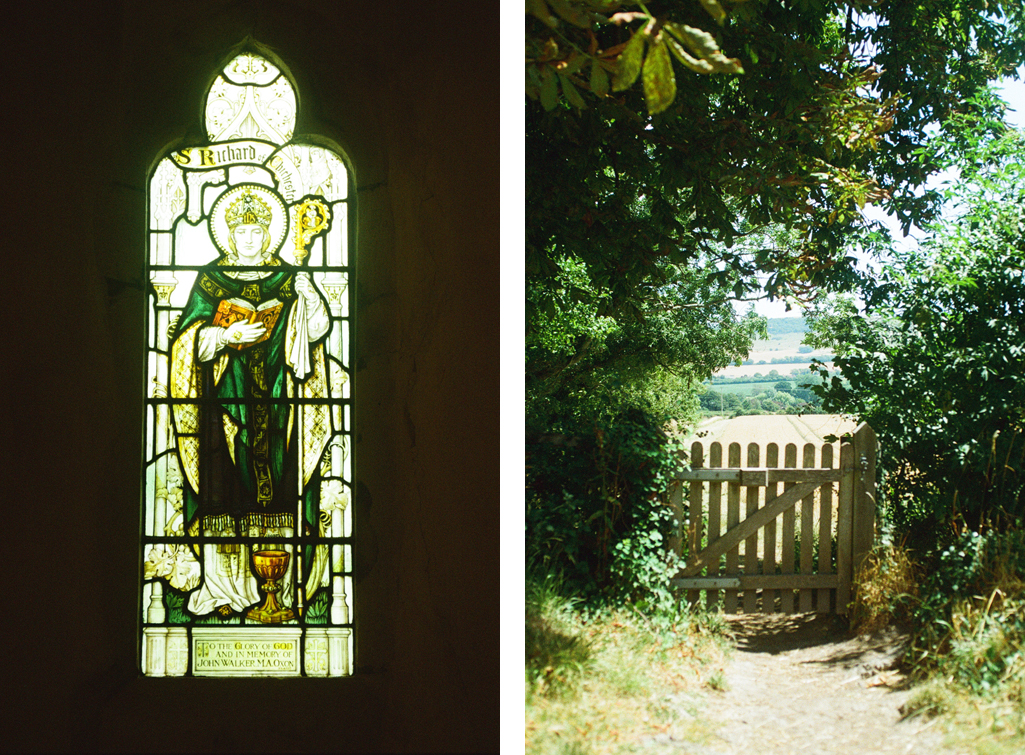
I decide to take a turn around the graveyard with its tombstones feathered in scorched-summer grasses and then slip through a gap in the hedge, where I discover a bench overlooking the Sussex Downs. I wonder if such a seat existed in Duncan’s time and whether he would have similarly sat here, taking a moment to imbibe the spectacular landscape, before continuing on with his work.
When I eventually leave, taking the pebbled-dashed path back to the carpark, Bishop Bell’s immortal words come to mind: a call to worship, a call to adore. What else needs to be said?
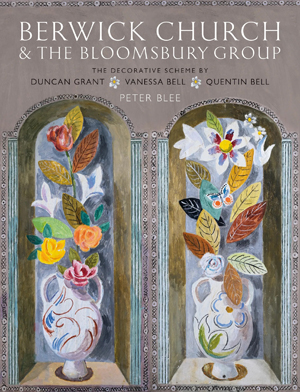
Writers & Artists Spirituality Series
Post Notes
- All images: © Paula Marvelly, Berwick Church,
except Alvin Langdon Coburn, Duncan Grant, Fair Use - St Michael and All Angels, Berwick Church website
- Charleston
- Writers & Artists Spirituality Series
- Virginia Woolf: A Room of One’s Own
- Jean Cocteau: Chapelle Saint-Pierre de Villefranche-sur-Mer
- Paula Marvelly: Sacra di San Michele
- Henri Matisse: Chapelle du Rosaire de Vence
- Paula Marvelly: Sanctuaire Notre-Dame de Laghet
- Krishnamurti’s Notebook
- Marc Chagall: All Saints’ Tudeley
- The Culturium uses affiliate marketing links via the Amazon Associates Programme