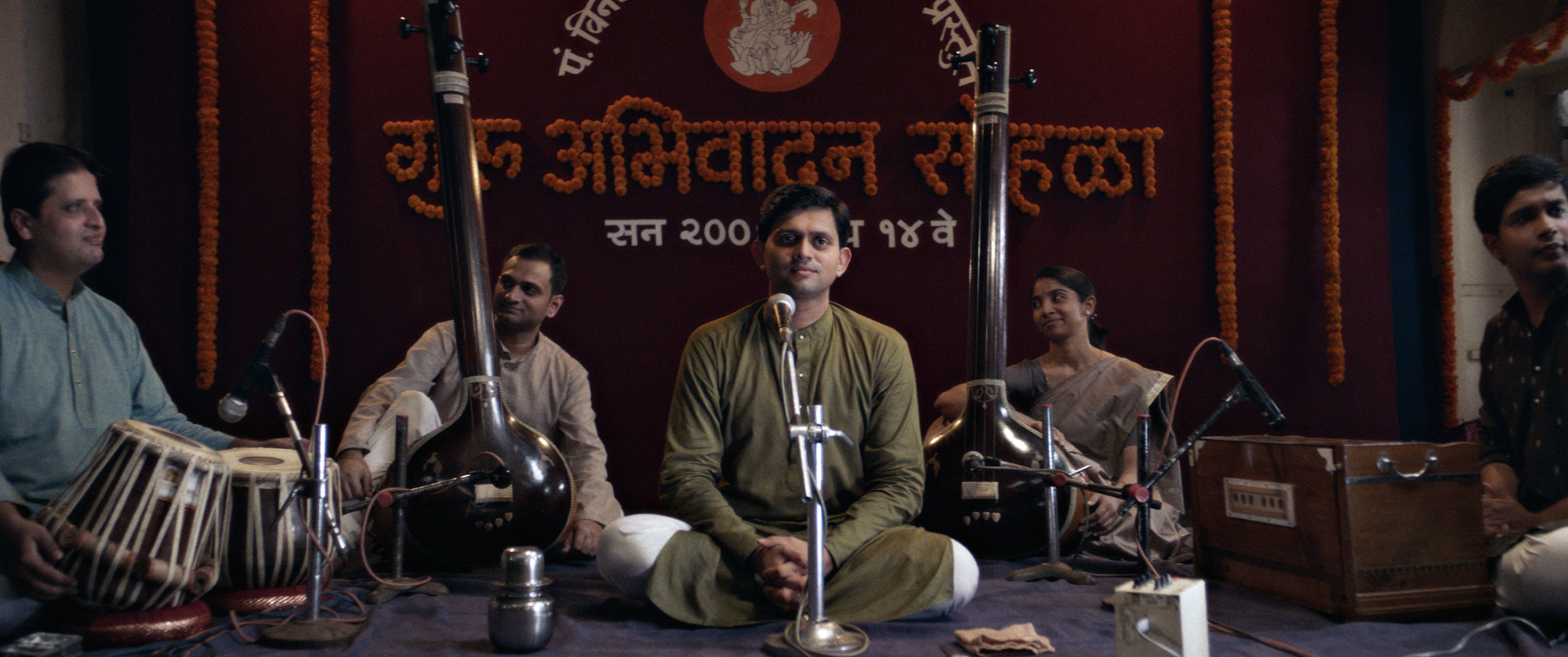
The Eternal Quest
“Do not stop the flow of thoughts in your mind. Just observe them.
Let your repressed emotions come to the fore.
Good, bad, all of them. They exist. Just observe them.
Just like your mind, your body is trying to converse with you.
Try to listen to it.”
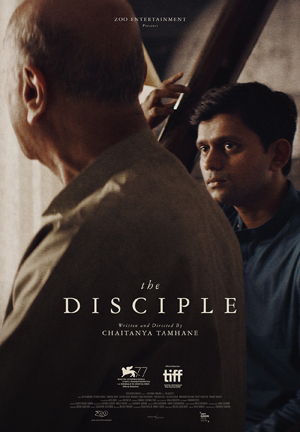
THE DISCIPLE IS a thoughtful, introspective Indian drama about the life of a classical music student and, more poignantly, an artist’s inner journey. Written, directed and edited by Chaitanya Tamhane (born 1st March 1987), the film premiered at the 77th International Venice Film Festival in 2020, winning the illustrious FIPRESCI Critics Prize for Best Screenplay and later reaching a wider audience through Netflix. As a humble, self-professed connaisseuse of the arts, it has been a very long time since I watched a recently released movie so exquisitely accomplished, the essence of which has lingered with me for several weeks.
Resonating beyond its specific cultural setting, The Disciple portrays a universal dilemma: the artist’s search for meaning, mastery and recognition, often in the face of isolation and self-doubt. It avoids romanticizing its protagonist’s struggle; instead, it offers a persistent, compassionate look at the tensions between tradition and modernity, discipline and self-acceptance.
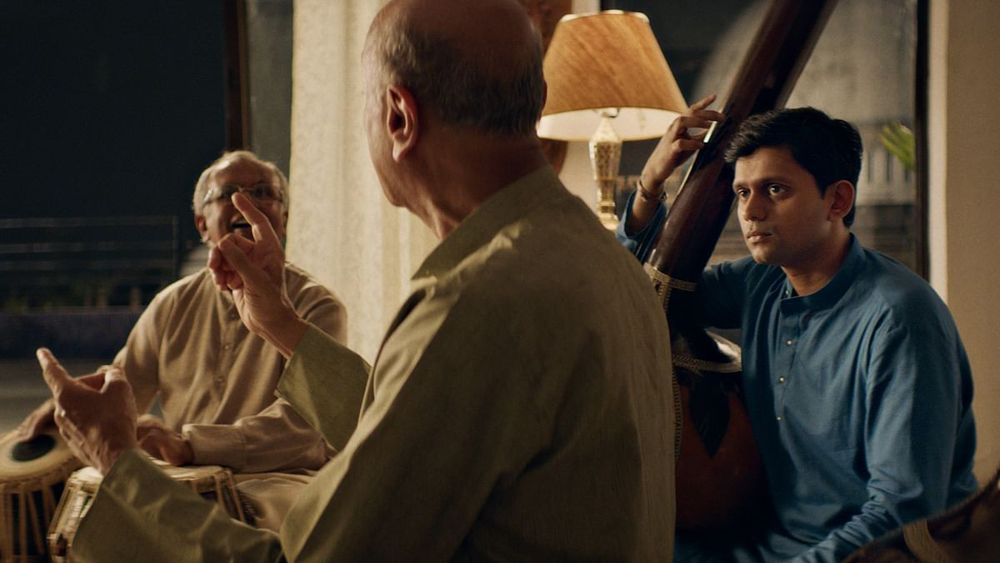
© Chaitanya Tamhane, The Disciple
Saints and ascetics have attained this music after thousands of years of rigorous spiritual pursuit. It cannot be learnt so easily. Even ten lifetimes are not enough … Through this music, we are shown the path to the Divine. There’s a reason why Indian classical music is considered an Eternal Quest. And to embark on that quest, you will have to surrender and sacrifice. If you want to earn money, raise a family, then perform love songs or film songs. Don’t tread this path. If you want to walk this path, learn to be lonely and hungry.
—Maai
The story follows Sharad Nerulkar (adroitly played by Aditya Modak), a devoted aspiring vocalist of Hindustani classical music who lives with the conviction that through disciplined study and practice he can reach the highest pinnacles of his art. From his youth under the guidance of his father to years of training with his ageing guru in Mumbai, Sharad’s life becomes an almost ascetic pursuit of perfection in a musical tradition that demands absolute commitment.
Sharad wrestles with self-doubt, the strain of tradition and the reality that his generation has little appetite for such austere music. Along the way he grapples with his guru’s rebukes, the seductive pull of popular culture and questions about what excellence truly means and whether the burdens he carries are ultimately worth it, made all the more powerful owing to the fact that Modak is himself a Hindustani classical vocalist in real life.
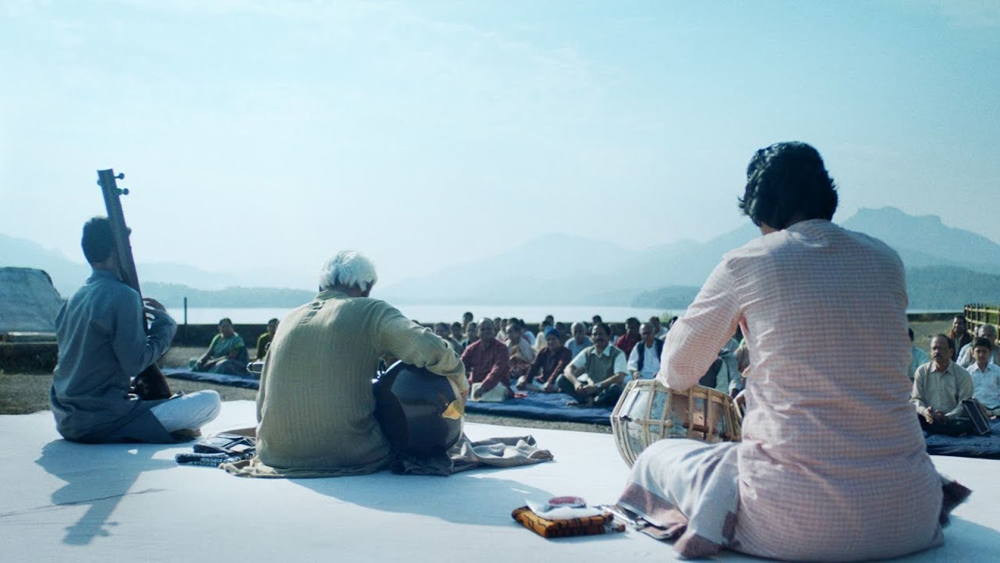
© Chaitanya Tamhane, The Disciple
A restless mind simply cannot sing Khayal music with depth and authenticity. To worship every note, every microtone, your mind has to be pure and unblemished. What is Khayal? It is the state of mind of the singer at that time, in that particular moment. He presents that state through the medium of a Raag. While singing, you yourself don’t know which new aspect of the Raag you will uncover. If you want the Truth of the Raag to spontaneously reveal itself, you will have to rid your mind of falsehood, greed and impure thoughts. Not everyone has the inherent discipline and faith required for this.
—Maai
One striking motif in the film is Sharad riding his motorbike through Mumbai late at night while listening on headphones to recordings of a mythical past master named Maestra Sindhubai Jadhav, affectionately known as Maai, whose austere teachings about devotion and purity echo in his mind. For me, these moments are pure spiritual transcendence as we are lulled by the drone of a tanpura, overlaid with Maai’s authoritarian commentary to the crackling accompaniment of the original tape recording’s ticks, scratches and pops.
Significantly, the evoked still point of Sharad sat astride his motobike counterpointed against the city’s passing slow-motion scenery is mirrored in shots of collective group meditation, with emphasis on the breathing techniques required to help settle the restless mind, leading to the purest melody of all—the liberating sounding of silence.
If you want to learn my music, then forget about the audience and other such notions. I do not sing for the audience or for patrons. I have no interest in showing off how many complex Raags I have mastered or how much training I have. I sing only for my Guru and for God. The other day someone asked me, ‘Maai, but shouldn’t we choose the Raag depending on the audience present?’ I said, ‘There are 200 people in a room. And 200 people have 200 minds. How many people will you try to please? Are you a circus monkey?’ We have plenty of posers around who performed all sorts of vocal acrobatics in the name of classical music. Fortunately, that’s not the kind of training I got from my Guruji. He would always say, once you close your eyes and utter the first note, nothing other than the Raag must be allowed to enter your mind. Then it does not matter, even if you fail that day … Because at least you tried with sincerity.
—Maai
The Disciple is not structured around dramatic set-pieces or plot twists. Instead, it unfolds as a meditative character study, using long takes, careful sound design and an immersive pace to evoke the emotional and spiritual cost of artistic devotion. It is a film that questions the very ideals of aesthetic mastery and the painful realities of pursuing excellence in a world that may not value the tradition as it once did.
Specifically, it is also about internal conflict as well as musical practice itself—Sharad’s journey is marked by sacrifices, frustrations, reverence and eventual acceptance of his place of mediocracy in the musical world. The narrative ultimately asks whether the pursuit of perfection is a noble quest or simply an impossible burden that exacts too high a price.
© Chaitanya Tamhane, The Disciple
He who has faith in Saraswati, the Goddess of Music, will surely be blessed by her. You don’t just practise the music but also [have] endurance and perseverance because this journey is long and arduous. I have never seen the best of them give up midway. There will be a thousand occasions to succumb and accept defeat. But you must not. He who has control over his mind can never be swayed from his path, no matter what the circumstances.
—Maai
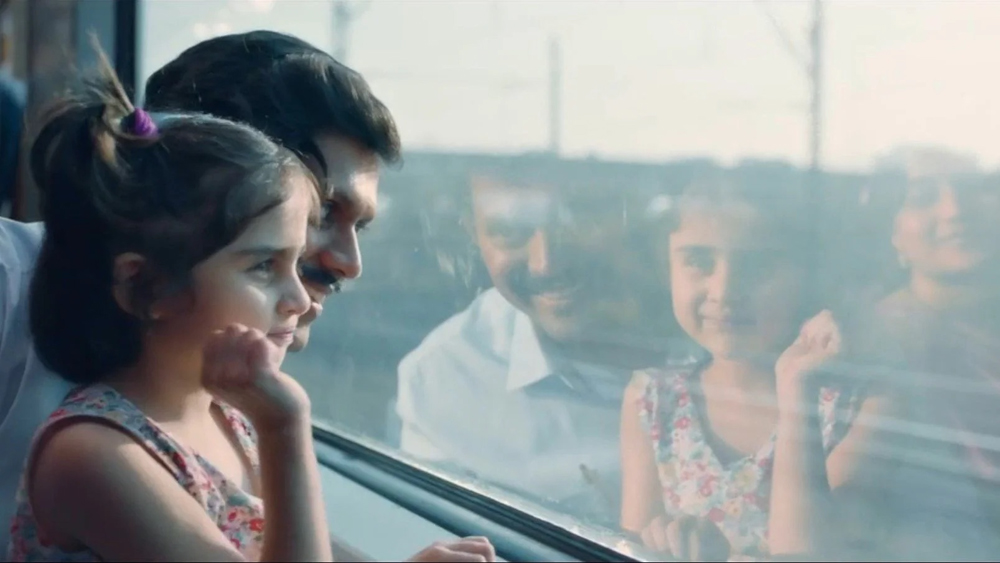
In the final scenes, we realize that Sharad Nerulkar has decided to raise a family of his own and earn money through his recording business ventures, essentially renouncing Maai’s dictates to avoid hunger and loneliness and the trappings of the material world. Has he given up his purist musical passion or simply become realistic about the demands of the human condition and expenses of everyday life? It is the perennial dilemma for any artist in whatever age.
Indeed, the closing sequence of Nerulkar and his family sitting aboard a train watching the world pass by is not wasted on the creative or spiritual aspirant and is an apposite motif on which to end. Does our protagonist eventually achieve mastery in spite of his domestic existence or will he yield to the understanding that being recognized as an artistic genius is not a hallmark of the trajectory of his mortal life? As I compose this piece on Oscar’s night, it is worth reminding ourselves that being a creative nobody in the eyes of the world does not necessarily mean that one is lacking in artistic merit. Only God can be our final judge.
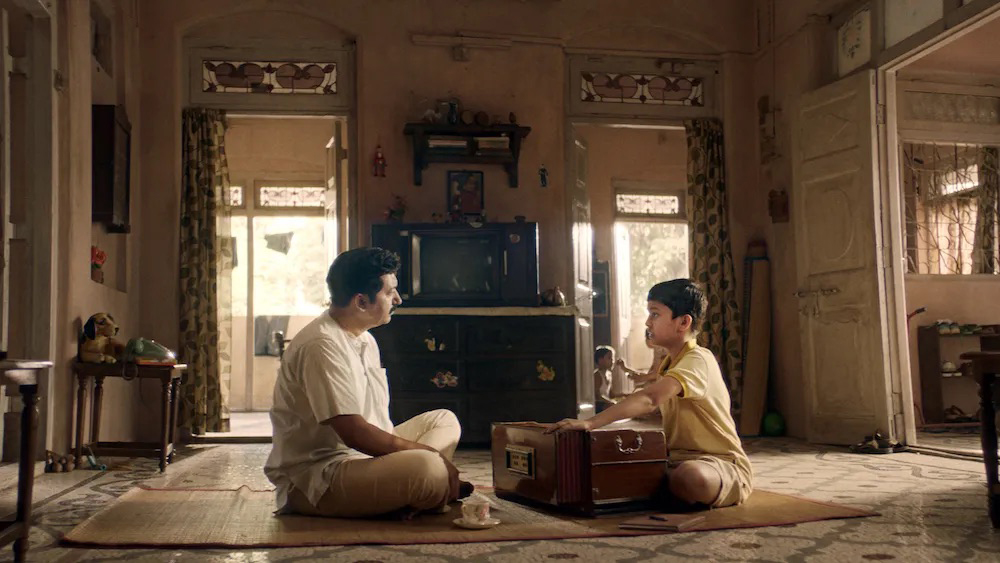
© Chaitanya Tamhane, The Disciple
Do not get entangled in technicalities. You may practise endlessly for years and years and gain complete mastery over technique but it will not lead you to the Truth. Technique is merely a medium to express your inner life. Technique can be taught. Truth cannot. For that, you must have the strength to look inwards with unflinching honesty. This is extremely difficult. It is a lifelong quest. That is why we call it Asceticism. And eventually, when you do encounter the Truth, it takes great courage to face it. Because the truth is often ugly. Unless this awareness seeps into your music …
—Maai
Post Notes
- Feature image: © Chaitanya Tamhane, The Disciple
- John Cage: Silence
- Arvo Pärt: Silentium
- John Tavener: Towards Silence
- John Adams: The Dharma at Big Sur
- Stephen Nachmanovitch: Free Play
- Paolo Sorrentino: The Great Beauty
- Abbas Kiarostami: 24 Frames
- Alain Resnais: Last Year at Marienbad
- Jean Cocteau: The Art of Cinema
- Andrei Tarkovsky: Cinematic Genius
- Nuri Bilge Ceylan: Once Upon a Time in Anatolia
- Sergei Parajanov: The Colour of Pomegranates
- Bill Viola & Michelangelo: Life Death Rebirth
- Abbas Kiarostami: Certified Copy
- The Culturium uses affiliate marketing links via the Amazon Associates Programme