Possession’s paradox
“As for you, my dear Balthus,
you surely know full well the love that binds us.
Yours with all my heart, Rilke.”
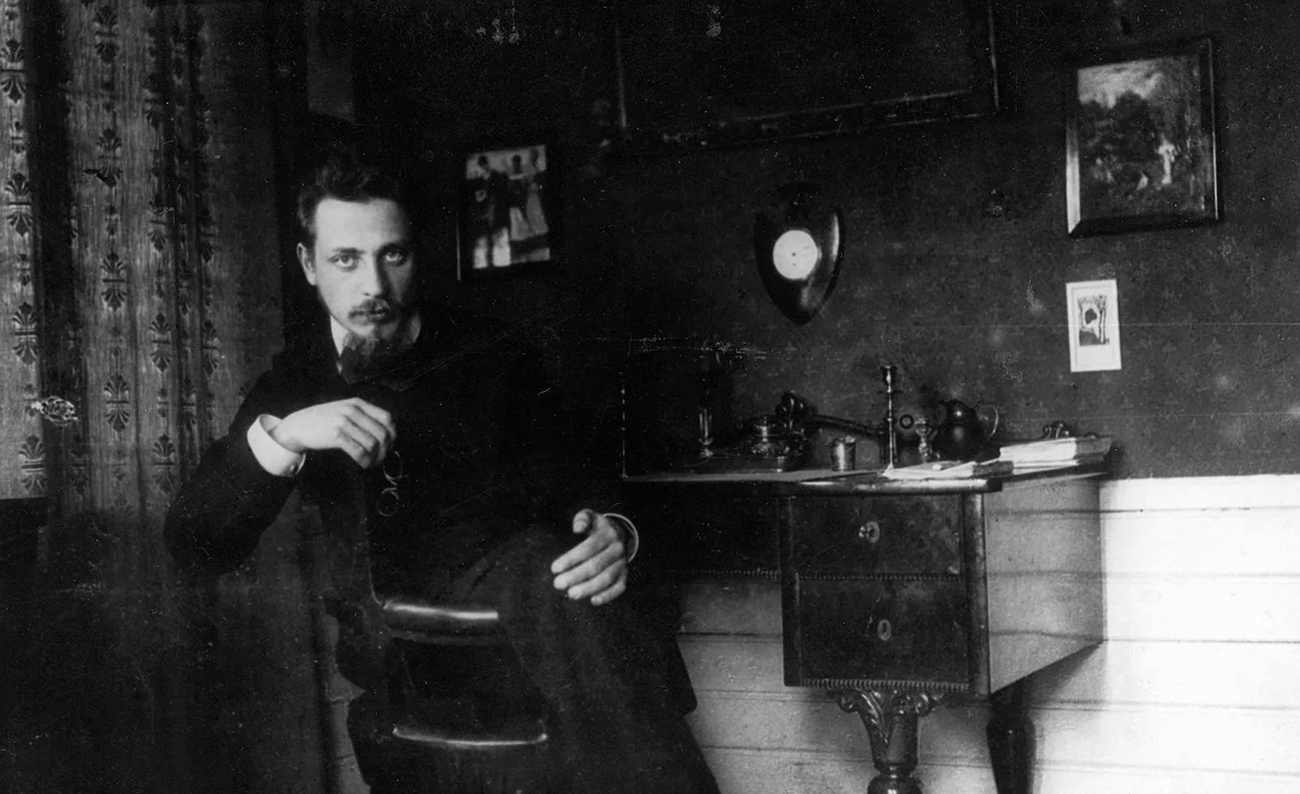
RAINER MARIA RILKE (4th December 1875–29th December 1926) stands among the most luminous figures of 20th-century European letters, a poet whose writings search tirelessly for the ineffable within the everyday. Born in Prague, he spent much of his life wandering between countries and languages, producing verse, prose and correspondence that continue to nourish generations of readers. His celebrated Letters to a Young Poet (1929) remains a touchstone for artists and seekers alike, distilling his vision of solitude, love and creative work as paths into the mystery of being and nature of self.
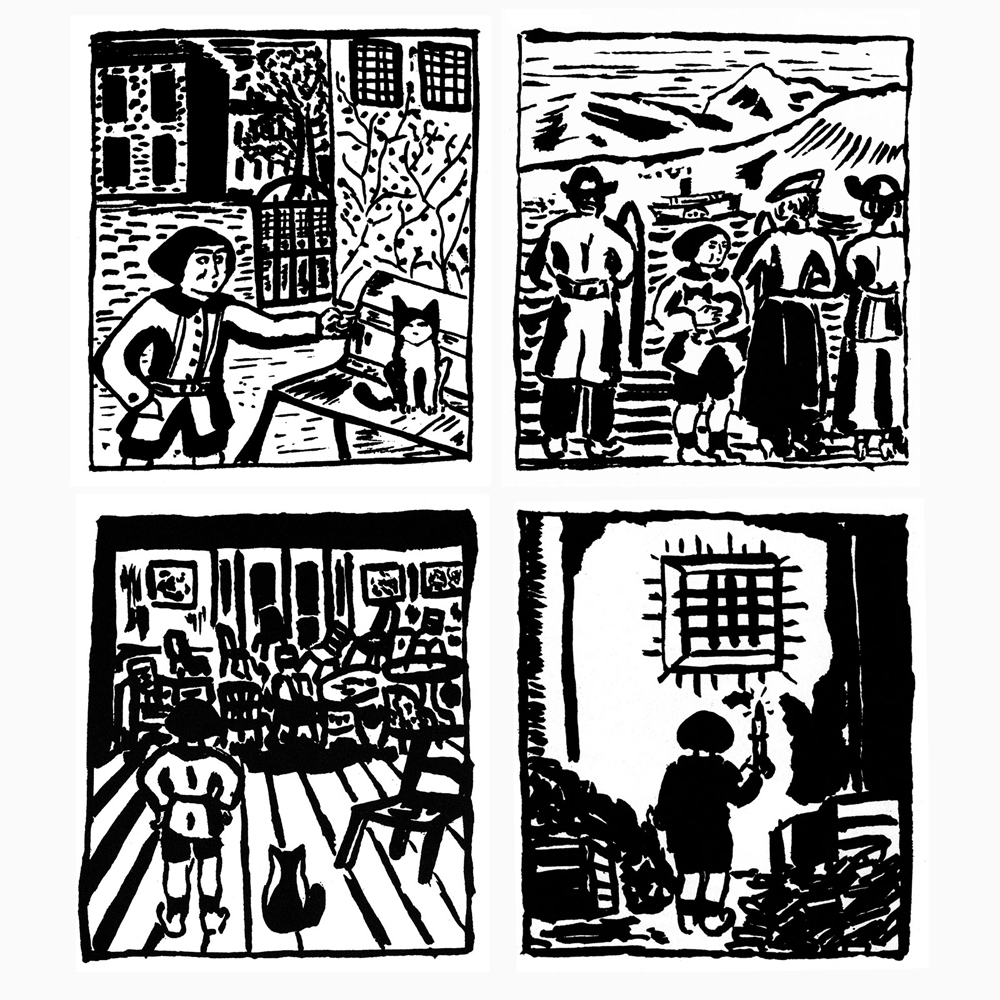
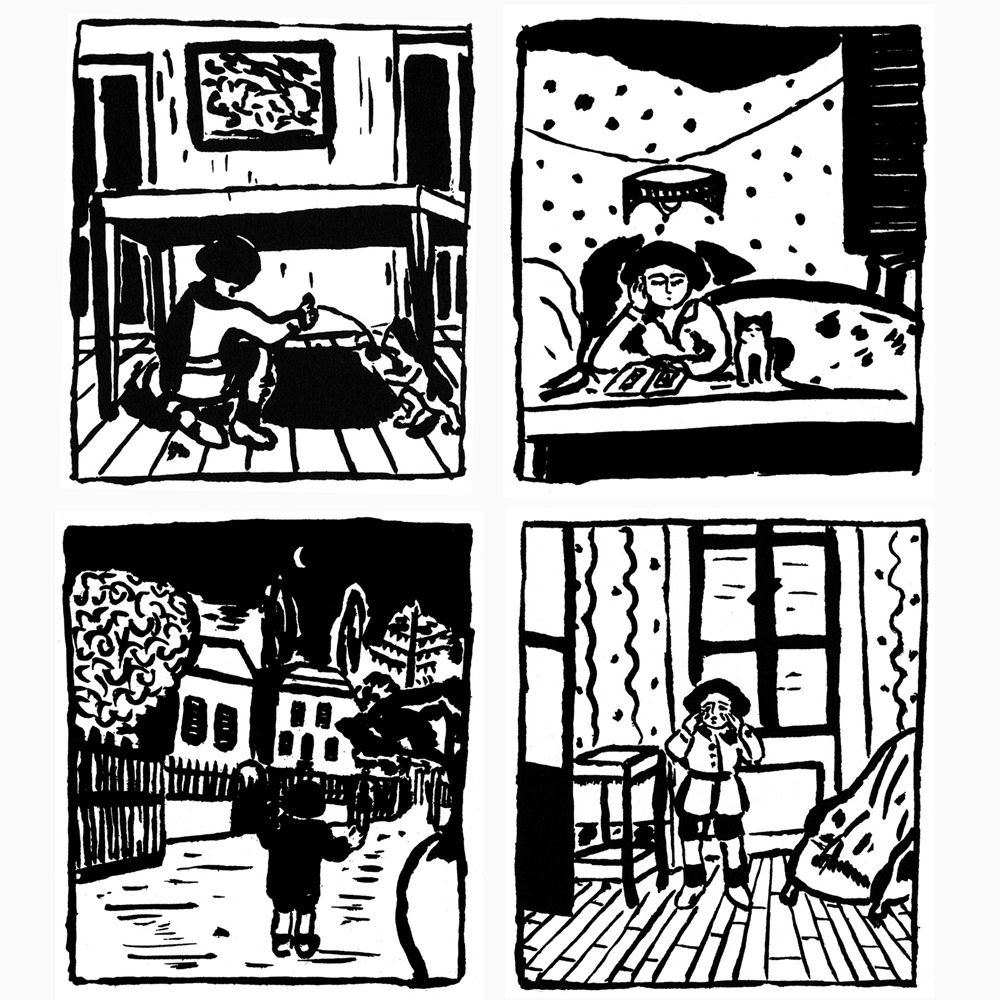
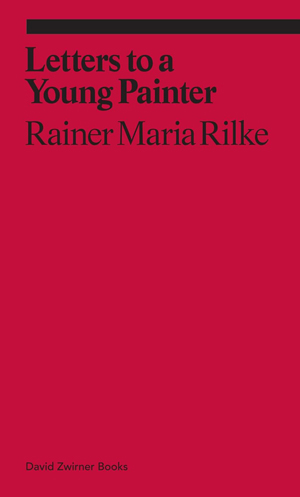
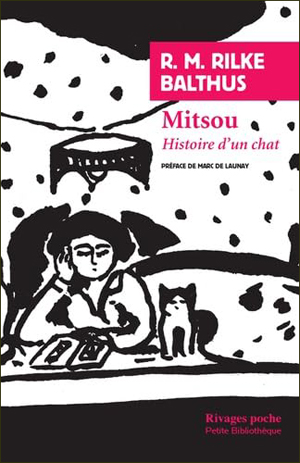
Less well known, yet equally revealing, is Letters to a Young Painter, only recently translated into English from the French (2017), which contains a collection of engaging and heartfelt epistles to the adolescent painter Balthus (Modernist Polish-French artist Balthasar Klossowski de Rola), as well as Rilke’s preface to Mitsou, The History of a Cat (1921). A charming series of 40 Indian ink drawings of the young artist’s adopted Angora stray which eventually runs away, the eleven-year-old’s sketches exhibit a startling precocity and talent for capturing the grief and devastation experienced at the loss of a beloved pet, from the first encounter of finding him on a park bench to the final moment of weeping for his lost friend.
Rilke’s meditations on Balthus’ ailurophilic sketches also resonate within the wider history of cats revered in art and literature, from Lewis Carroll’s Adventures in Wonderland (1865) and T. S. Eliot’s Old Possum’s Book of Practical Cats (1939) to Mikhail Bulgakov’s The Master and Margarita (1967) and Haruki Murakami’s Kafka on the Shore (2002). Inasmuch as all these celebrated texts explore the borders of the untamed world and threshold of domestication, Rilke’s preoccupation lies more in a cat’s essential mystery and independence, sardonically noting: “Has anyone ever truly known whether or not they deign to register our trifling image on the back of their retinas for even a moment?”
Balthus, Mitsou
Permeating Letters to a Young Painter‘s prefatory remarks, Rilke articulates his abiding conviction that art is an act of personal revelation. To paint, to write, to compose is to uncover something already shimmering within the very fabric of existence. Indeed, his reflections speak across the decades to any soul beginning a creative journey, reminding us that the discipline of attention and the courage to live in the moment, whatever fate has in store, are feats of devotion to the artistic craft.
According to Rachel Corbett in her brilliant introduction, such beliefs were instilled when Rilke went to Paris to write a monograph about Auguste Rodin—famed for his sculptures The Kiss (1882) and The Thinker (1904)—who urged him in answer to the question how one should live: “You must work, always work.” Passing on the sagacious advice, Rilke also encourages the young Balthus (then Baltusz) not to shut himself off from the world, as he had done himself, but to stake his place decisively in it, beholding his being as the embodiment of a true artist, at one with all that exists.
This is borne out in an initially perplexing passage at the end of Rilke’s preface but which, upon closer examination, is a profound and intentionally enigmatic observation on life, meant to be interpreted philosophically rather than literally. Reasoning that cats exist in a separate world from humans, they are impossible to possess or even lose. Anticipating French philosopher Jacques Derrida’s declaration that “there is nothing outside of the text” (« il n’y a pas de hors-texte »), the cat’s true identity prevails only, therefore, beyond anthropological experience and yet, paradoxically, is in fact intimately known through its representation in art, transforming absence into an imaginative inner presence, immortalized for all time.
Balthus, Mitsou
It is always nice to find something. Just a moment before, it hadn’t been there. But to find a cat is incredible! For you must admit that the cat never totally enters our life the way, for example, a toy does. While it belongs to you now, a little remains outside, and that means we always have:
life + a cat,
which adds up to an enormous sum, I assure you.
It is very sad to lose something. We can imagine only that it is suffering, it has hurt itself somewhere, it will come to a sad end. But to lose a cat—no! It cannot be. No one has ever lost a cat. Can one lose a cat, a living thing, a living being, a life? To lose a life is death!
Well, then, it’s death.
Finding. Losing. Have you truly considered what it means to lose something? It is not simply the negation of that other, generous moment that answered an expectation you never suspected you had. For between that moment and the loss there always comes what we call—however clumsily, I agree—possession.
Now a loss, however cruel it may be, has no power over possession. It ends the possession, if you wish; it affirms it; but ultimately it is a second acquisition, entirely inward this time, and far more intense.
You yourself have realized this, Baltusz—no longer seeing Mitsou, you truly set about seeing him.
Is Mitsou still alive? Well, he lives on in you, and his joy, that of a frisky little kitten, after once having entertained you, now compels you: you have had to express it by means of your painstaking sadness.
And so, a year later, I found you had grown bigger, and were consoled.
Still, for those who will always see you bathed in tears at the end of your book, I composed the first, somewhat fanciful part of this preface. To be able to tell them at the end: ‘Don’t worry: I am. Baltusz exists. Our world is whole.
‘There are no cats.’
Rainer Maria Rilke
Berg-am-Irchel Castle
November 1920
Post Notes
- Feature image: Unknown, Rainer Maria Rilke
- Image source for Balthus, Mitsou: Cabinet Magazine
- Rainer Maria Rilke: Letters to a Young Poet
- Rainer Maria Rilke: On Solitude
- Rainer Maria Rilke: The Testament
- Mark Rothko: The Artist’s Reality
- Agnes Martin: Writings
- Kahlil Gibran: Poet, Painter, Prophet
- Wassily Kandinsky: Concerning the Spiritual in Art
- The Culturium uses affiliate marketing links via the Amazon Associates Programme