Yes to life
“This is, for me, a ‘change of instrument’—
the palette to one side and the typewriter in its place.
I use the ‘instrument’ because the force that motivates
my work remains unchanged, an ‘inner drive’.
And it is this very drive that calls for a frequent change of instrument.”
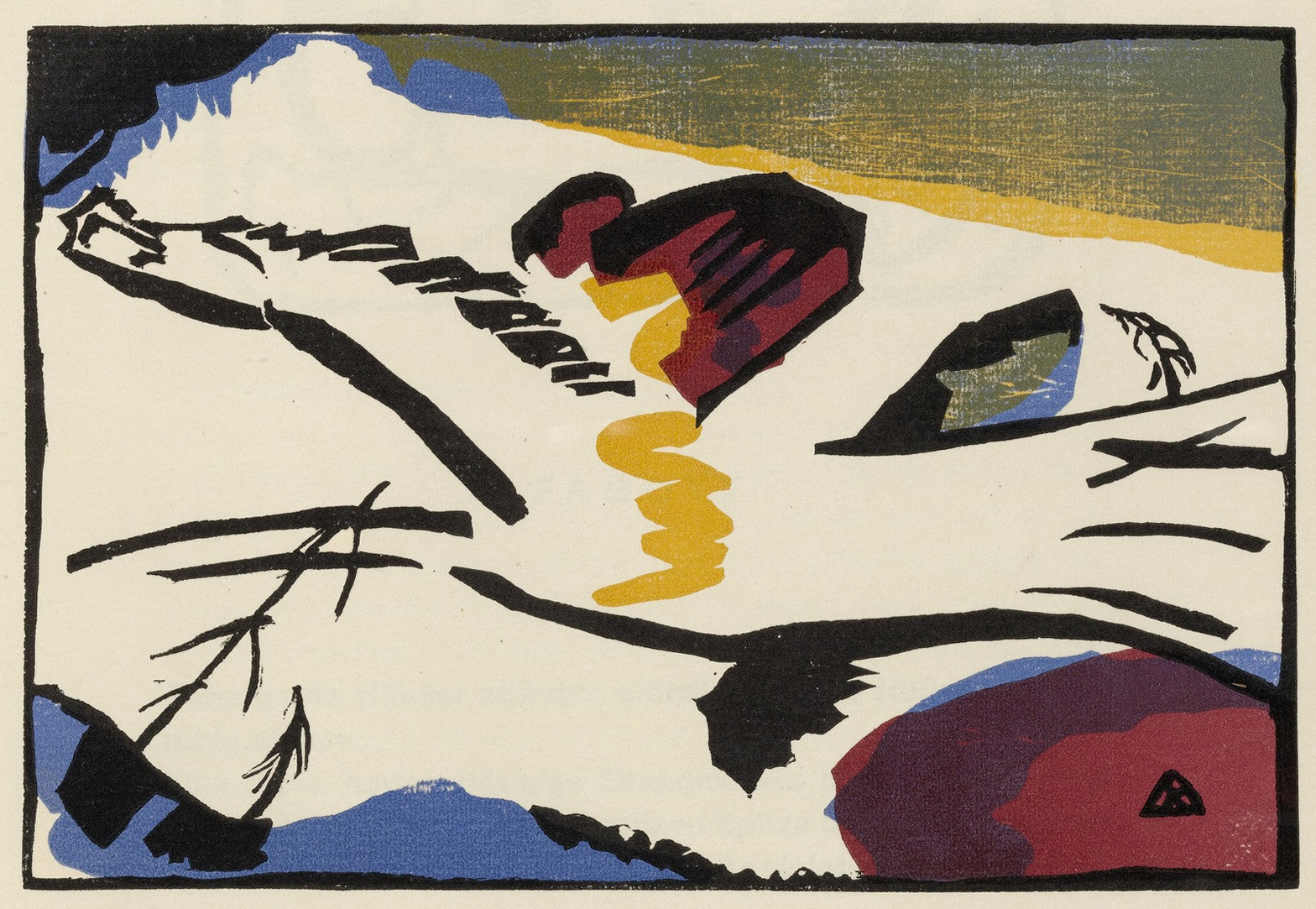
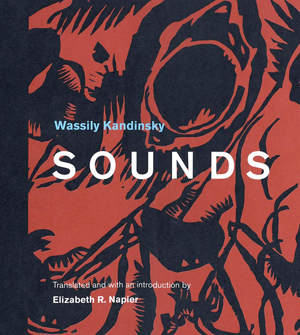
WASSILY KANDINSKY’S SOUNDS (Klänge, 1912) is a rare and beguiling creation, poised between painting and poetry, image and word. Conceived at the height of the German Expressionist “Blue Rider” movement in Munich, just before the outbreak of the First World War, it takes the form of an artist’s book: a sequence of short prose-poems or “sound poems” set alongside stark woodcut prints in both colour and black and white. Kandinsky was already articulating in his treatise Concerning the Spiritual in Art (1911) of his conviction that painting could move the soul in the same way that music does. In Sounds, that vision is tested across the very fabric of language and graphics through his unique synthesis of the linguistic and visual arts.
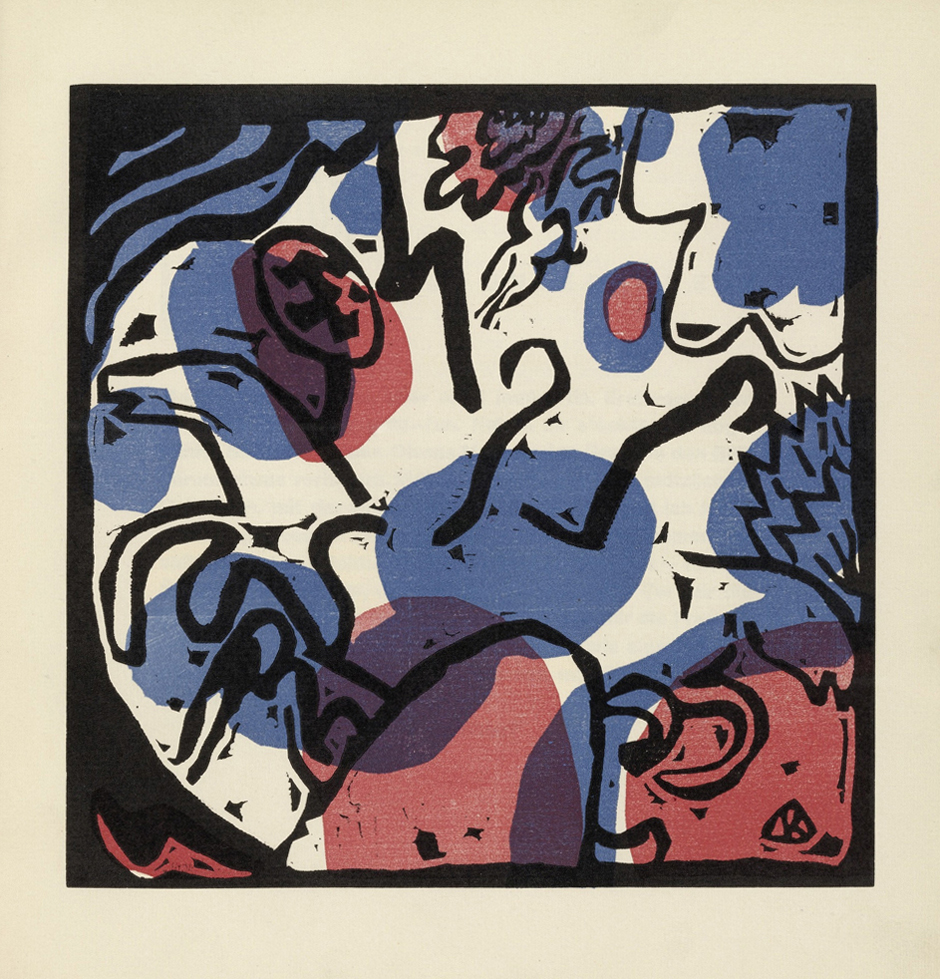
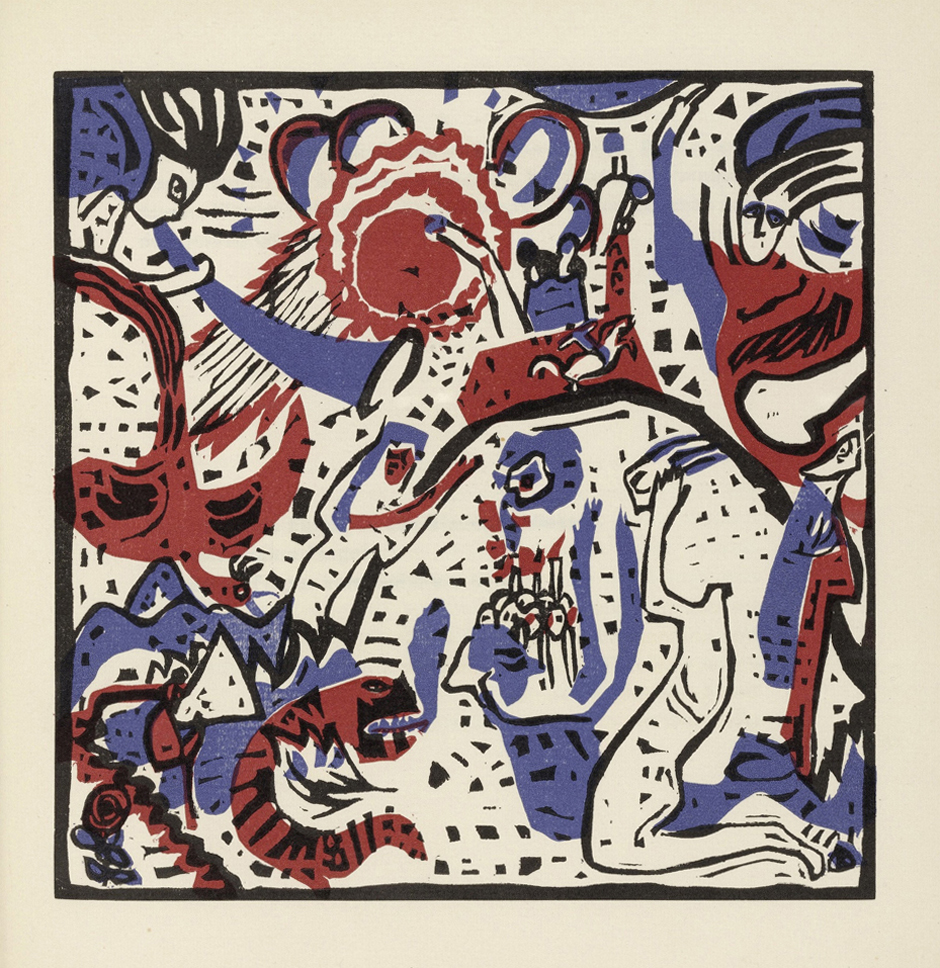
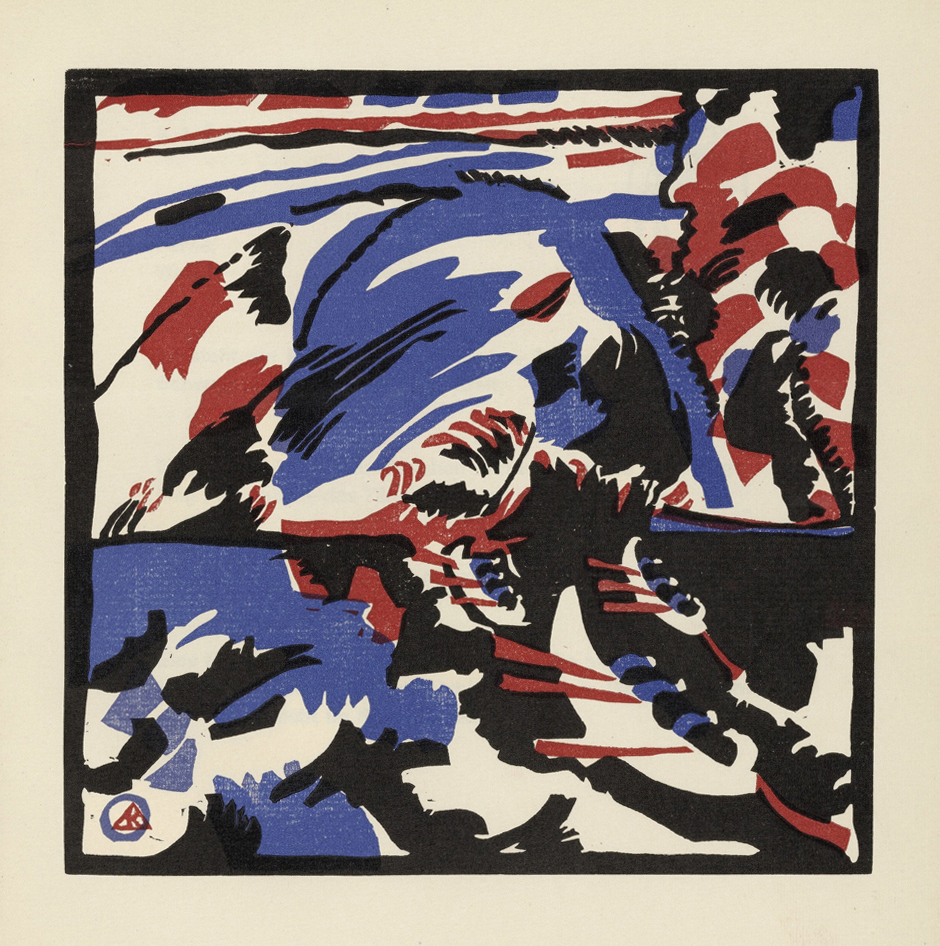
Indeed, in the Russian painter’s move from objective representation towards abstraction, Wassily Kandinsky (16th December 1866–13th December 1944) created his texts not as narratives in any conventional sense but verbal improvisations as if fragments of a synaesthetic dream. Hovering closer to music than literature, Sounds offers moods and rhythms rather than tangible narratives with each phrase quivering like a note, breaking free from the logic of prose and punctuation before dissolving into cadential chords. In parallel, the accompanying woodcuts offer simplified figures and abstract motifs that resonate with the poems’ inner rhythm, amplifying their tonal essence to an exquisite symbiotic effect.
The title itself resists easy translation. Klänge can be rendered as Sounds, yet it also carries the suggestion of resonance, tone, reverberation. For Kandinsky, this nuance was essential: words were not mere vehicles of meaning but living vibrations, akin to colour or line, each one touching the soul with its own intensity. Seen in this light, Sounds is more than a book; it is an experiment in pure perception, where silence and sound, image and word, converge in a single field of awareness into a unified experience of awe.
Wassily Kandinsky, Sounds
WHY ?
‘No one came out of there.’
‘No one?
‘No one.
‘One?
‘No.
‘Yes! But when I came by, there was one standing there.
‘At the door?
‘At the door. He stretched out his arms.
‘Yes! Because he doesn’t want to let anyone in.
‘No one came in there?
‘No one.
‘The one who stretched out his arms, was he there?
‘Inside?
‘Yes. Inside.
‘I don’t know. He just stretches out his arms so no one can get in.
‘Was he sent there so No One can get in? The one who stretches out his arms?
‘No. He came and stood by himself and stretched out his arms.
‘And No One, No One, No One came out?
‘No One, No One.’
Wassily Kandinsky, Sounds
HYMN
Within, the bluish wavelet tosses.
The torn and shredded scarlet cloth.
Scarlet tatters. Deep blue wavelets.
The ancient book whose place is lost.
Looking silent in the distance.
Dark confusion in the wood.
Deeper grow the deep blue wavelets.
Scarlet cloth sinks down for good.
Wassily Kandinsky, Sounds
A THING OR TWO
A fish went deeper and deeper into the water. It was silver. The water blue. I followed it with my eyes. The fish went deeper and deeper. But I could still see it. I couldn’t see it anymore. I could still see it, when I couldn’t see it.
Yes, yes, I saw the fish.Yes, yes I saw it. I saw it. I saw it. I saw it. I saw it. I saw it. I saw it.
A white horse on long legs stood quietly. The sky was blue. The legs were long. The horse was motionless. Its main hung down and didn’t move. The Yes, yes I saw it. I saw it. I saw it. I saw it. I saw it. I saw it. I saw it.
A white horse on long legs stood quietly. The sky was blue. The legs were long. The horse was motionless. Its main hung down and didn’t move. The horse stood motionless on its long legs. But it was alive. Not a twitch of a muscle, no quivering skin. It was alive.
Yes, yes. It was alive.
In the wide meadow grew a flower. The flower was blue. There was only one flower in the wide meadow.
Yes, yes, yes. It was there.
Post Notes
- Feature image: Wassily Kandinsky, Sounds
- WassilyKandinsky.net
- Wassily Kandinsky: Concerning the Spiritual in Art
- Paul Cézanne: La Montagne Sainte-Victoire
- Paul G. Chandler: The Canvas of Life
- Ansel Adams: The Search for Beauty
- Antony Gormley: Sculpted Space Within and Without
- Eric Nicholson: William Blake’s Vision of the Book of Job
- Agnes Martin: Writings
- Nicholas Roerich: Beautiful Unity
- Josef Pieper: Only the Lover Sings
- Albert Camus: Jonas or The Artist at Work
- Mark Rothko: The Artist’s Reality
- The Culturium uses affiliate marketing links via the Amazon Associates Programme