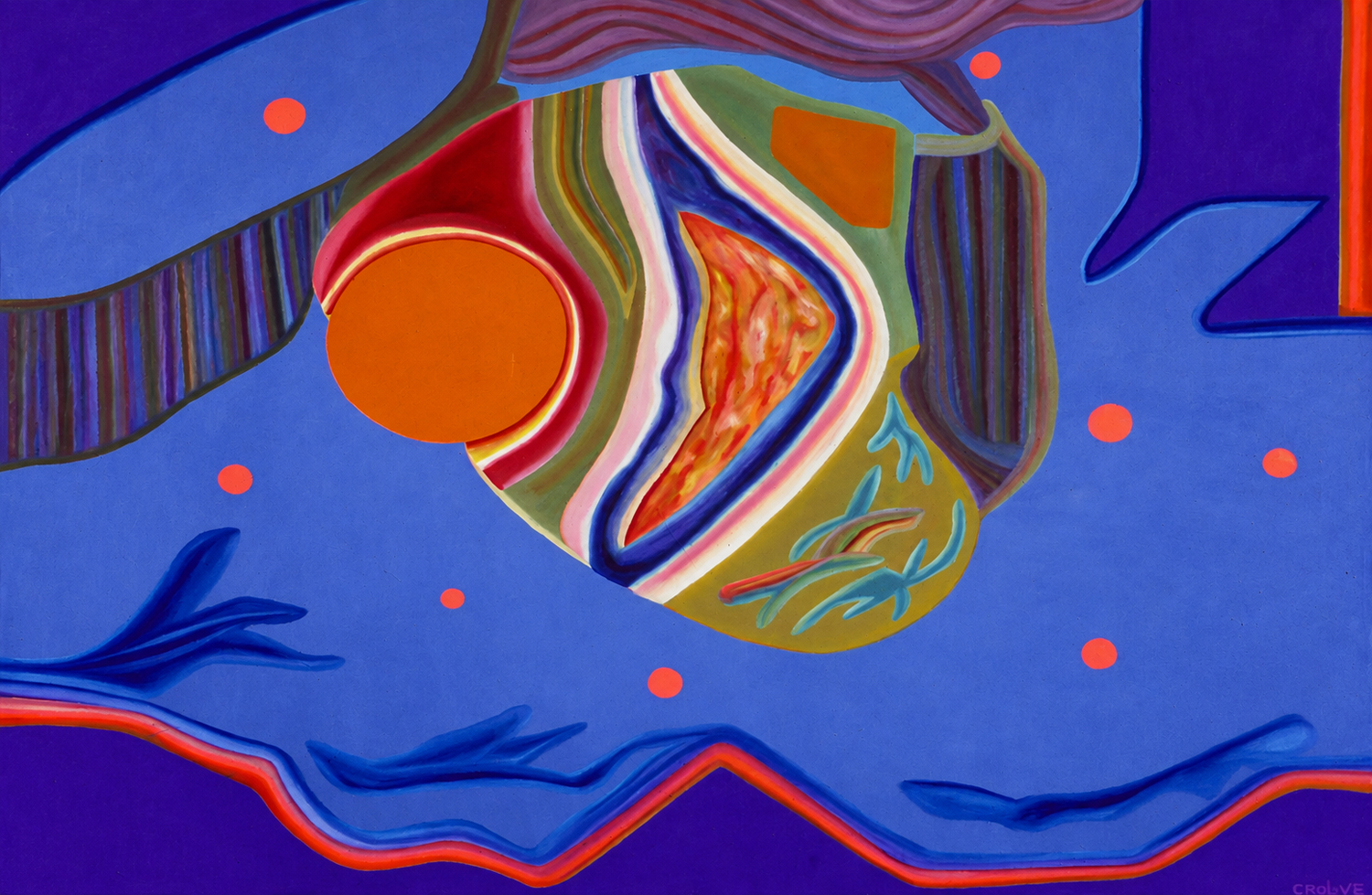
My beginnings in art
The aim of art is to represent
not the outward appearance of things
but their inward significance.
—Aristotle
CAMILO VILLANUEVA is a contemporary Argentine abstract painter, born in Buenos Aires in 1950. He is widely recognized for his deeply spiritual, introspective and transpersonal art, which critics often describe as a form of visual alchemy. Influenced by the legendary Argentine mystic artist Xul Solar, Spanish master Joan Miró and Russian art theorist Wassily Kandinsky, as well as the individuation process of Carl Jung, his non-figurative, vivd paintings explore concepts beyond our three-dimensional reality and the phenomenal world.
Camilo graduated from high school in 1967 and went on to study art at the Museo Rómulo Raggio in Buenos Aires. For the first part of his adult life, he followed a traditional path, marrying in 1976 and raising two children. At the age of 35, undergoing a profound artistic catharsis, he made the pivotal decision to completely leave his mundane city job, and eventually even his own marriage, in order to devote himself exclusively to painting and the creative process.
Moving to a cabin in the Calamuchita Valley, located in the scenic mountains of the Córdoba Province of Argentina, Camilo’s life for the following 12 years would become immensely productive in the evolution of his craft. Immersed in nature, he painted prolifically, exhibiting his developing style in regional galleries as well as founding a local art magazine called Puente, meaning “Bridge”.
In 2010, Villanueva resettled in Buenos Aires, where he began displaying his work in high-profile art galleries, cultural hubs and international hotels. Today, his portfolio is featured on digital art platforms and his physical pieces reside in private collections across the globe.
Aristotle’s thought contains a profound truth. We come from a spiritual dimension, where the creator, in order to manifest itself, must enter into matter with all its imperfections. Yet this is a way of seeing itself, and of allowing us to participate in its creation, within an indivisible Unity which we must attain.
We need to see through the eyes of the spirit in order to begin to understand our presence on this earth and all the creation that surrounds us.
Abstract art conceals all these mysteries through colour, vibration and form. For my part, I would add sound, which arises naturally from the depths of our being. It does not pass through the intellect, nor does it follow established techniques of painting. It flows naturally. The painter, guided by his inner energy, gradually delineates the forms. The same happens with colour. They are the forms and colours of creation, which constantly live around us and within us, sending us a message.
When observers look at the paintings, something within them is stirred. They are inspired to search; they enter a state of profound calm. There is no need to interpret them; they need to be felt, and then we may understand everything they convey to us. But this will depend upon the spiritual evolution of each observer.
Abstract art is deeply connected to the inner world of each painter and to his spiritual evolution, and to a search for unity in all its aspects. One must simply see from a place of deep inner silence.
In summary, abstract art is born within us. It flows like a river that empties into the sea of unity.
We are all creators in one way or another. We each contain a part of infinite creation within our lives, and we must develop it in the best way possible, in pursuit of the common good.
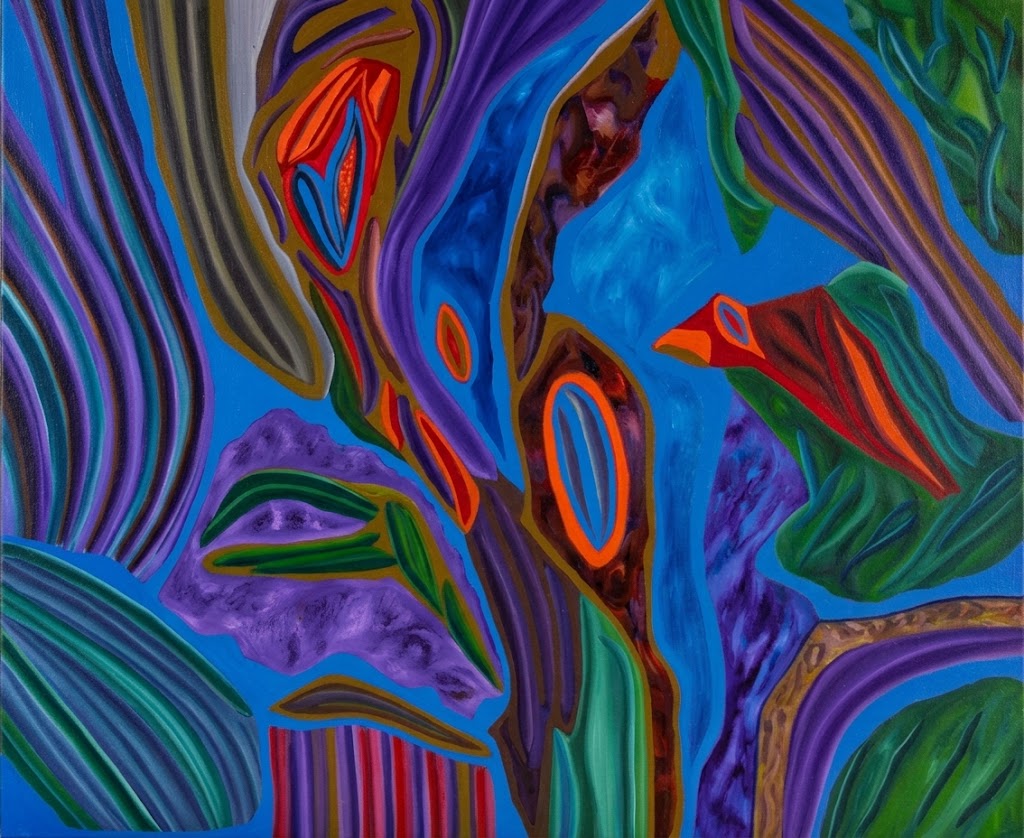
© Camilo Villanueva, Selva Interna
Oil on canvas
80 × 100 cm
From a young age I was always interested in the mysteries of life. I asked myself the questions that, at some point, we all ask. But in my case, as in that of many others, I felt a need to go deeper, although I did not understand why. I knew that to truly come to know it as it is would be impossible within our small minds. Later, over the years, when I read J. Krishnamurti’s “truth Is a pathless land”, it confirmed what I had thought: no one possesses absolute truth.
During those years I studied, went to school, then university, obtained a job in a company, got married and had two children. But throughout all those years, in my free time, I read philosophy, both Eastern and Western, spiritual traditions and comparative religion. In all these readings, according to the analyses carried out by professionals and scholars of these subjects, psychology was always present: the study of the reasons behind human reasoning and behaviour, and of the workings of the mind, in order to explain such events throughout the course of civilizations.
But I also had the feeling that the spiritual and religious events that had occurred among the civilizations known from approximately 10,000 BC onwards had something in common. They repeated themselves, with different names and settings. I also believe that, with some events, stories and names, we need to discover the true intention hidden beneath the literal words.
And so the years passed: family life, social life, work and spiritual reading, while I tried to deepen my encounter with creation.
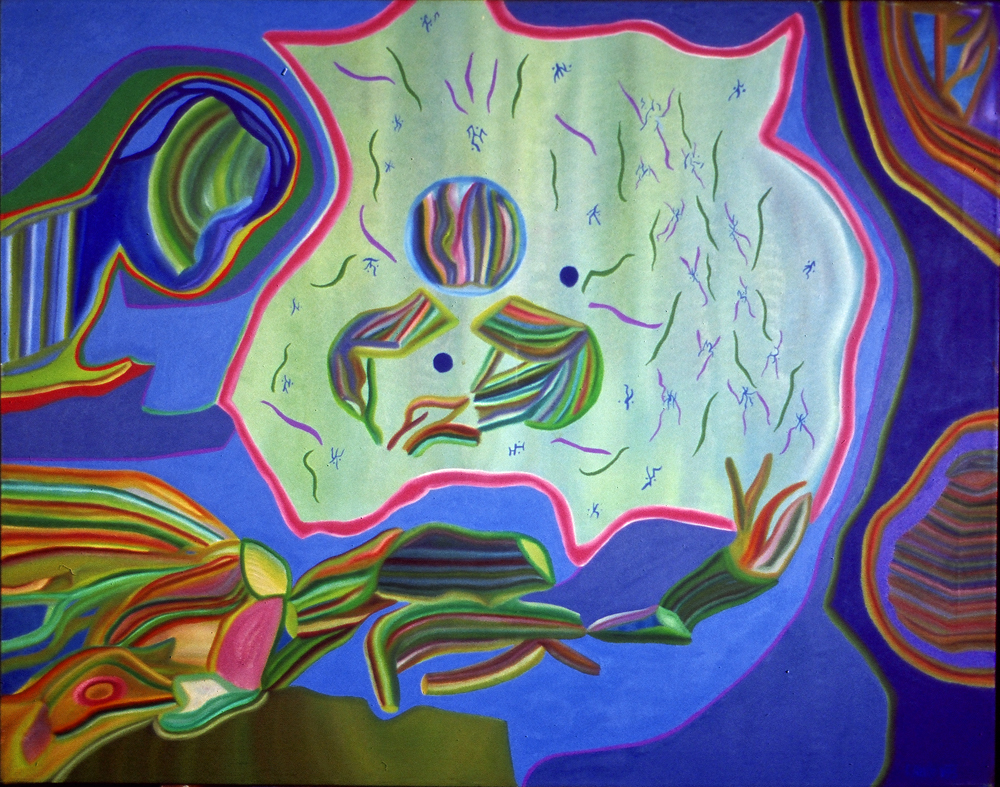
© Camilo Villanueva, Nuevo Continente 2
Oil on canvas
80 × 100 cm
One day, in 1985, a brother-in-law of mine, a music teacher whom I had known since I got married, asked me whether I had any drawings from school. I found a folder containing some artwork and showed it to him. My drawings consisted of lines and geometric figures, with very little figurative representation. I always passed the subject with the minimum grade. I remember that the teacher never demanded that I change my style. I think that, deep down, he liked them. He never told me so, but they were not what he had asked us to draw.
A few weeks later he came to me and said, ‘You have to start painting.’
I looked at him and said, ‘What?’
Astonished, he replied, ‘Yes, as soon as possible.’
He insisted so much that I began, with pencil and paper. Little by little, it was as if a water tap that had been closed for many years had suddenly been opened and an unstoppable stream began to flow. I moved from pencil to tempera and then to oil.
My life changed by 180 degrees.
My family was astonished, but the force was stronger than me. It was an inner force that was impossible to stop. The consequences were that I had to leave my job and find independent work that would allow me to continue along this path while supporting my family. But over time, everything around me gradually began, so to speak, to fade away. I eventually had to divorce. I know this is difficult to understand for someone looking at it from the outside, and I came to understand it myself.
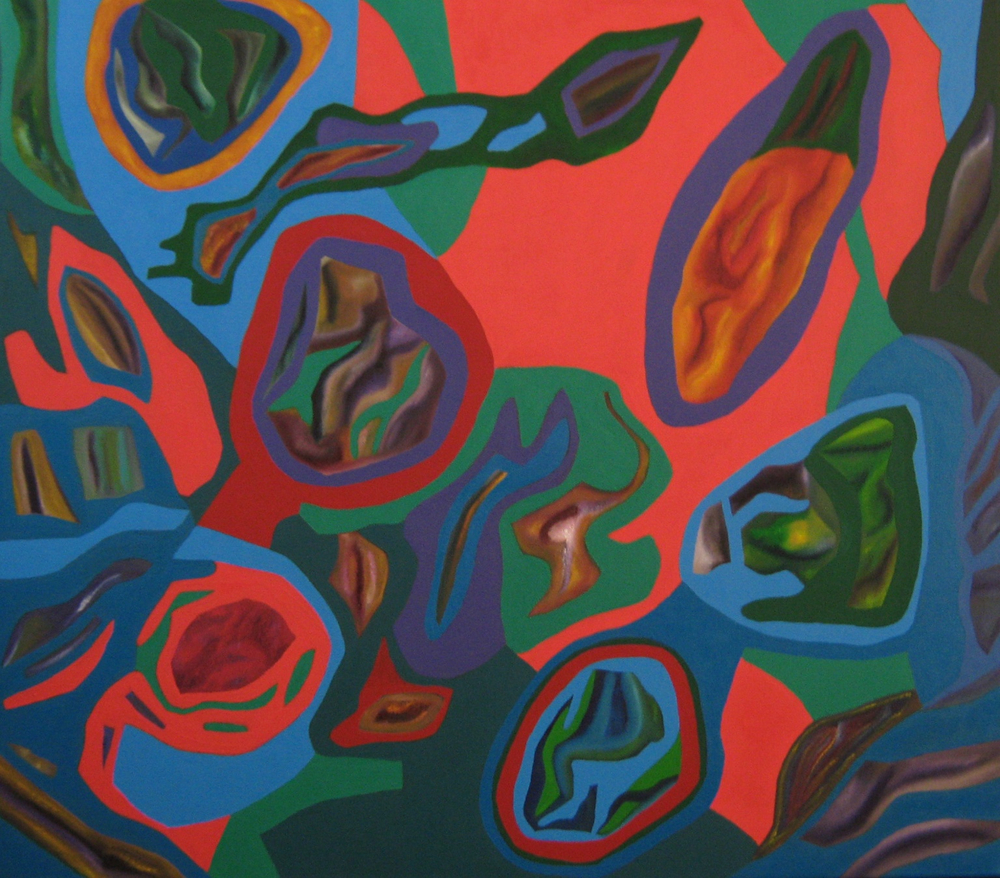
© Camilo Villanueva, El Maestro II Óleo
Oil on canvas
80 × 100 cm
I began showing my paintings in art galleries. Something about them attracted the galleries, but I sensed that they did not want to take the risk. When they asked me where I had studied art, or with whom I had studied, I did not know how to answer them. But I always told them the truth in two words: ‘I am self-taught.’
The response was: ‘Find a teacher, take some classes, start building your CV, and then come back and see me. Otherwise it will be difficult.’
Every encounter was a disappointment for me. I understood that it would be very complicated and wondered whether it would be worth it. But what was emerging from within me was stronger. It was impossible to stop that energy.
I continued regardless. The problems accumulated, but I did not give up. I faced every storm, visiting galleries. Some encouraged me; others, given my age and my artistic background, did not take me into consideration.
In 1994, I received an invitation from the Babilonia Gallery to exhibit in Uruguay. It was a group exhibition. I took the risk, above all to begin building that much-needed CV. The painting travelled there and back, but it was a beginning. The same thing happened the following year with the La Maja Arte Bar gallery in 1995.
Meanwhile, I took a course in Colour Theory at the Rómulo Raggio Museum, again to add something to my résumé.
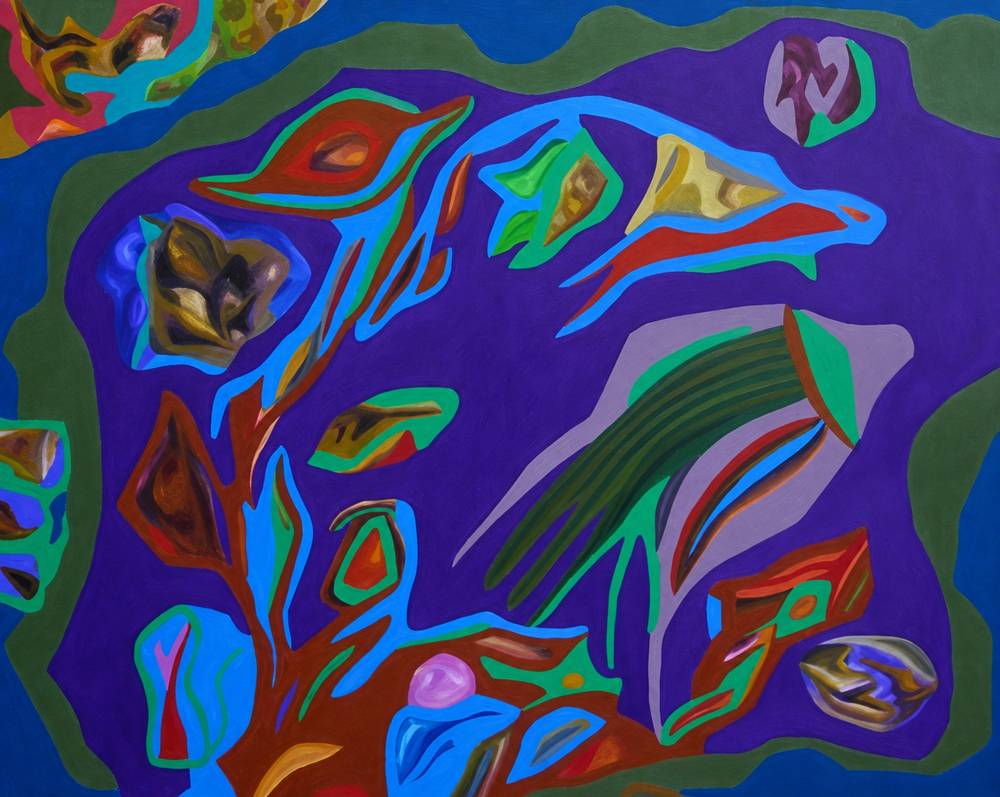
© Camilo Villanueva, Naturaleza
Oil on canvas
80 × 100 cm
That same year, at the Sociedad Rural Argentina, a very large exhibition venue in Palermo, Buenos Aires, they were accepting paintings related to spirituality and esotericism. They accepted me, and I believe that this was when my path began to take shape.
A psychologist approached me and said, ‘Your painting has something to do with Carl G. Jung.’ He invited me to have a coffee with him and explained the foundations of Analytical Psychology. In those years it was referred to as Transpersonal Psychology. He spoke about archetypes, the unconscious, the collective unconscious, individuation, spirituality, religion, the shadow, alchemy (symbols of the unconscious) and mandalas, which he associated with my paintings.
But before we finished, he said to me: ‘It will not be easy for you. It will be difficult, but you will get there. Have a lot of patience, and do not concern yourself with time or with the years. Everything will arrive at the right moment. You will find the people who will help you and, as Jung said, what you are seeking is seeking you. You will find them. They will be people with a great spiritual openness. Your painting is not for this age.’
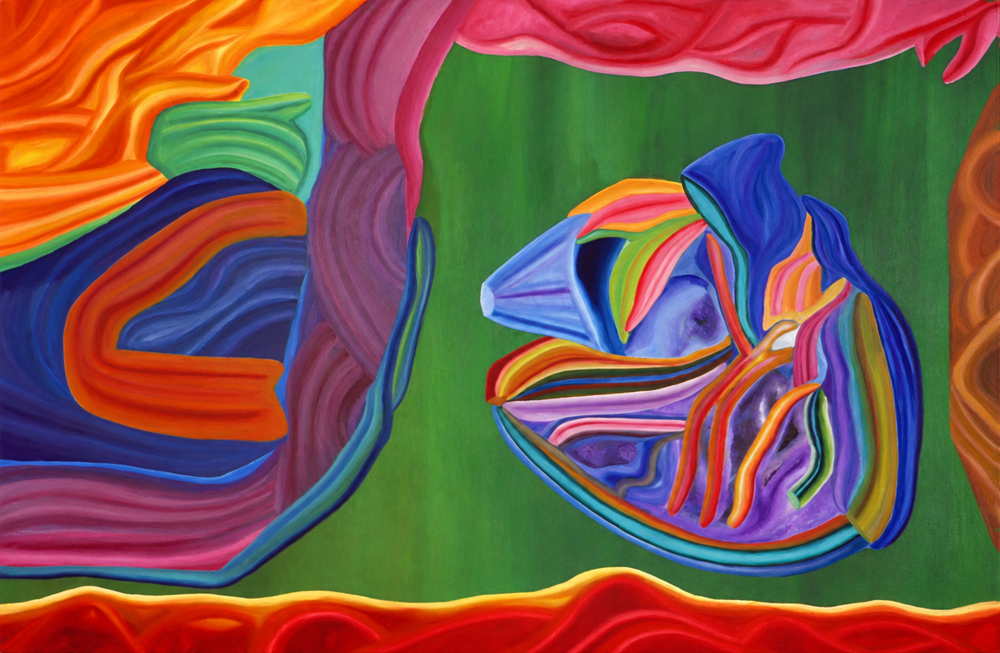
© Camilo Villanueva, El Maestro I
Oil on canvas
80 × 100 cm
He subsequently put me in contact with the College of Professionals in Transpersonal Psychology of the Argentine Republic. That year, the College’s congress was held at the Sheraton Hotel, and he was the person who introduced me there.
In 1996, the same congress was held again and I was invited to participate. Later that same year, there was another event at the Conquistador Hotel. I continued showing my paintings in galleries and at art foundations, but at that time nothing concrete came of it.
It was during one particular meeting that my mind brought together everything I had read. What my brother-in-law had told me many years earlier had been the first thing to mark out my path. It was as if a fusion had taken place within me, and I understood my entire past.
But now I had an even more demanding task. Life had given me something to show, something that manifested itself within me through my painting: a search for stillness, for controlling our thoughts and entering into deep silence, that silence which expands our consciousness.
It is the silence that speaks to us and makes us understand that matter and spirit form the body of this universe, which is something living that contains us and contains itself. We are diversity living within unity.
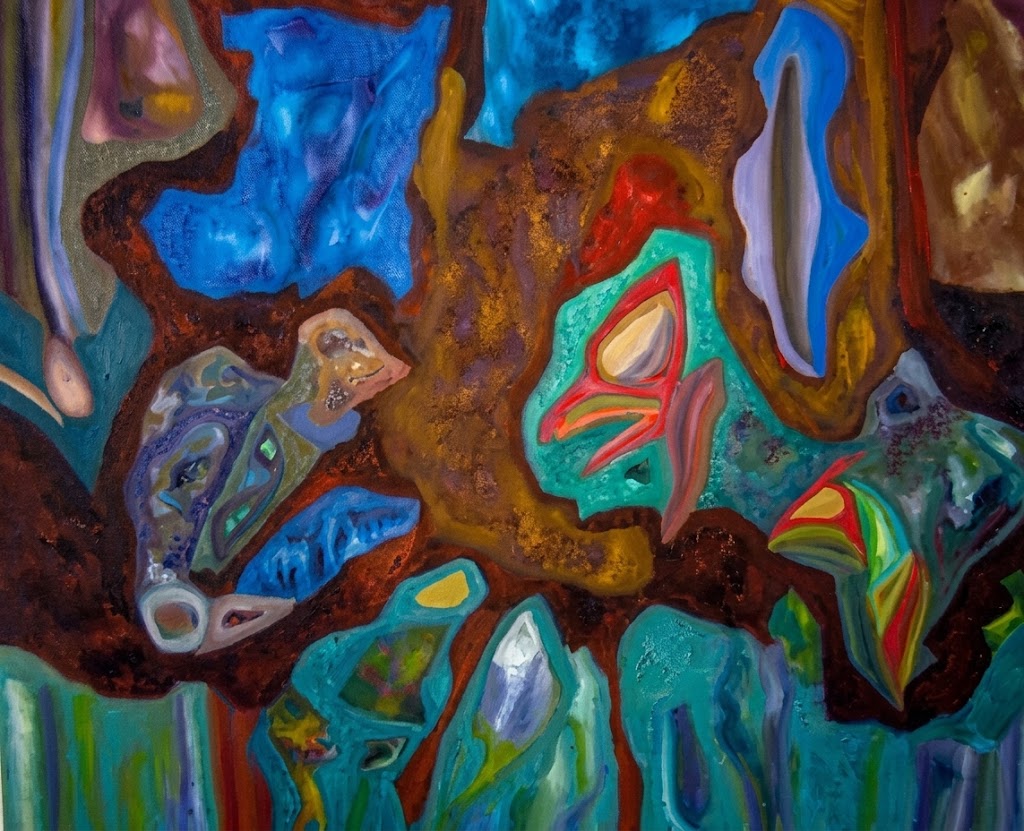
© Camilo Villanueva, Selva Interna 2
Oil on canvas
80 × 100 cm
For Carl G. Jung, mandalas are spontaneous expressions of the psyche that help restore mental order. They appear in India in the sacred books of the Rig Veda, representing the cosmos and spiritual unity.
They can also emerge through a profound spiritual crisis, during which one becomes aware of the mental conditioning that we inherit from generation to generation, which prevents us from fulfilling ourselves and encountering our own individuality. In other words, from leaving the ego and entering our own Self. The Self is the union of the conscious and unconscious, the ultimate goal of the personality.
Indeed, Carl G. Jung brought together the psychological and the spiritual, in a journey towards the encounter with that profound silence which opens the doors to a dimension where everything is unity.
I reflected on this, and it gave me greater strength. It confirmed that the path would be difficult and full of obstacles. But I also understood that my paintings represented a breaking of the circle of the mandala, whereby the circular form of containment was released. It was no longer necessary, because the union to which we all have the possibility of gaining access had taken place. It was the process of individuation that Carl G. Jung understood as the encounter with the Self.
In Carl G. Jung’s Analytical Psychology, the mandala represents the Self (the totality of the psyche). Upon attaining individuation, this organized centre does not disappear or become destroyed. On the contrary, it dissolves its rigid boundaries and opens itself, expanding consciousness towards its surroundings and the universe.
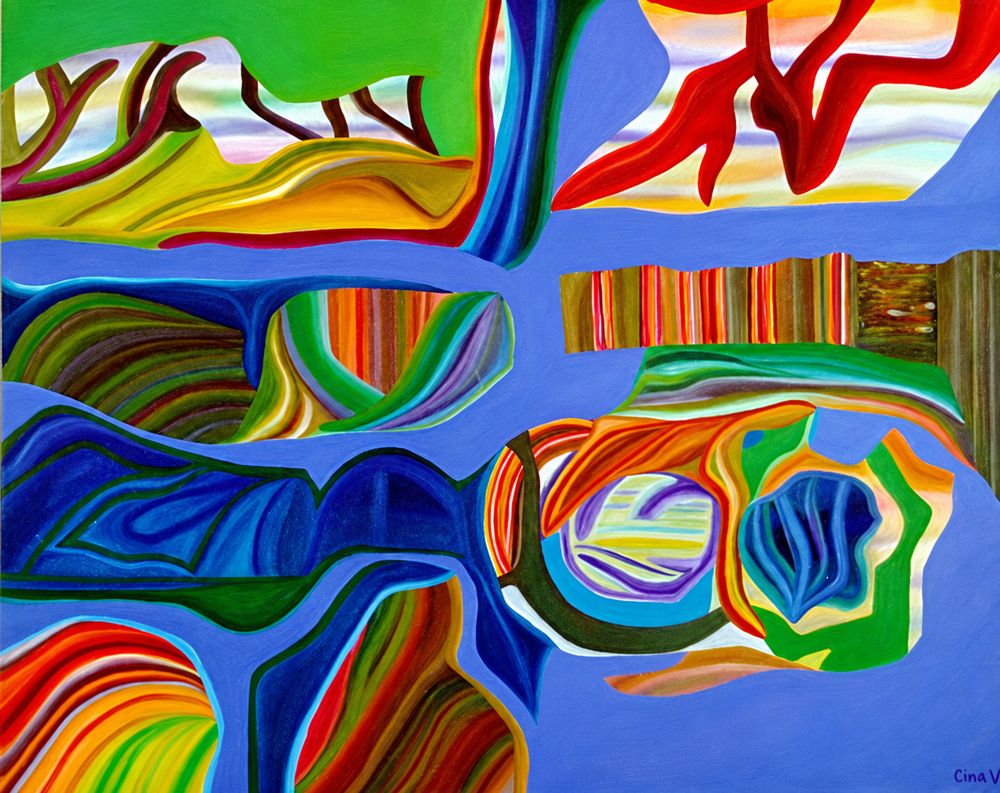
© Camilo Villanueva, Proximos Cambios
Oil on canvas
80 × 100 cm
Once again, an unexpected encounter in 1999, a synchronicity as Jung would call it, led me to move to the Province of Córdoba, to Villa General Belgrano, in the heart of the Córdoba hills.
It was a new destination to which life was leading me, for my evolution. I spent 12 years there. Its star-filled nights and landscapes were as if nature were speaking to you from the deepest part of your being.
I painted, exhibited in the village and in the city of Córdoba, sent many emails and received encouraging replies and comments from professionals, which I uploaded to my website. They were years of learning in every aspect of my life.
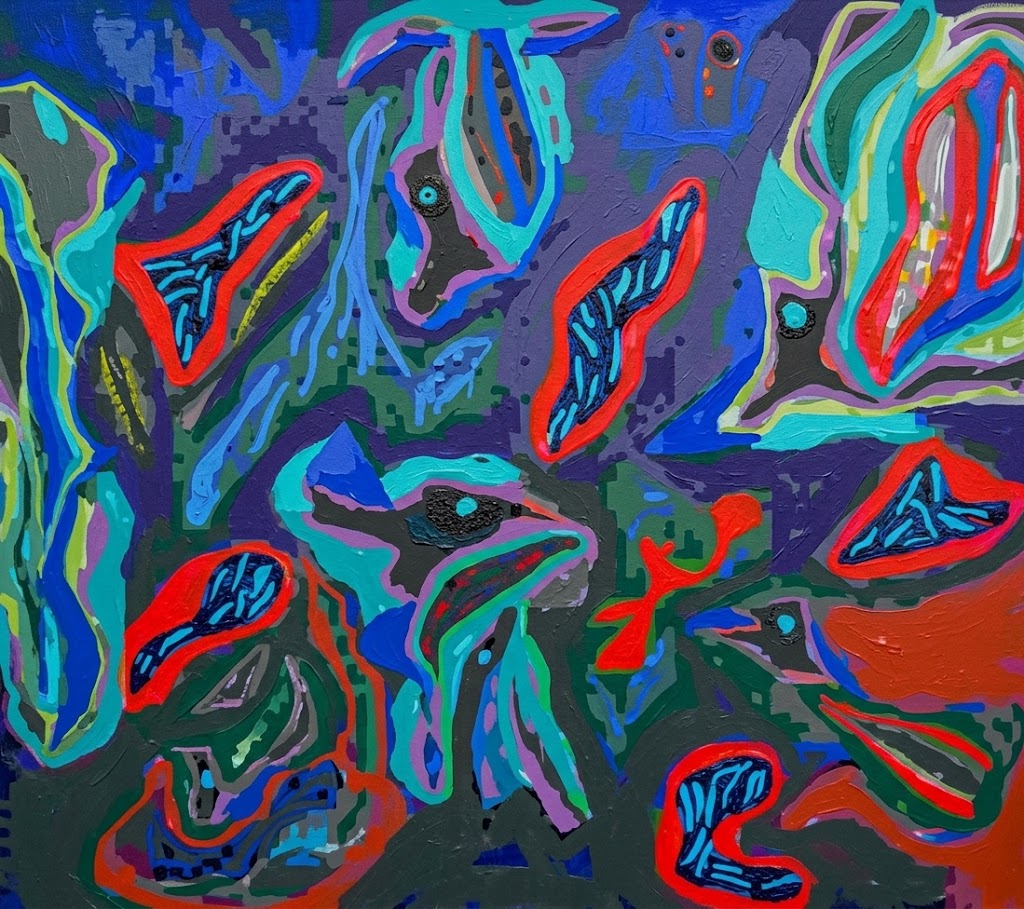
© Camilo Villanueva, Mystery
Oil on canvas
80 × 100 cm
In order to make a living, I created a magazine called Puente (‘Bridge’), which dealt with spirituality, psychology and art. I distributed it throughout the Calamuchita Valley. I would set out with my bag, take a bus and distribute it in the principal towns of the valley. The advertising came from the businesses I visited.
After returning to Buenos Aires, I participated in several exhibitions and, in 2022, I was invited to participate in the XXII International Congress of Analytical Psychology, held at the Sheraton Hotel in Buenos Aires. This was my last exhibition.
Based on the emails I send, I continue to receive encouraging responses to carry on along this path …
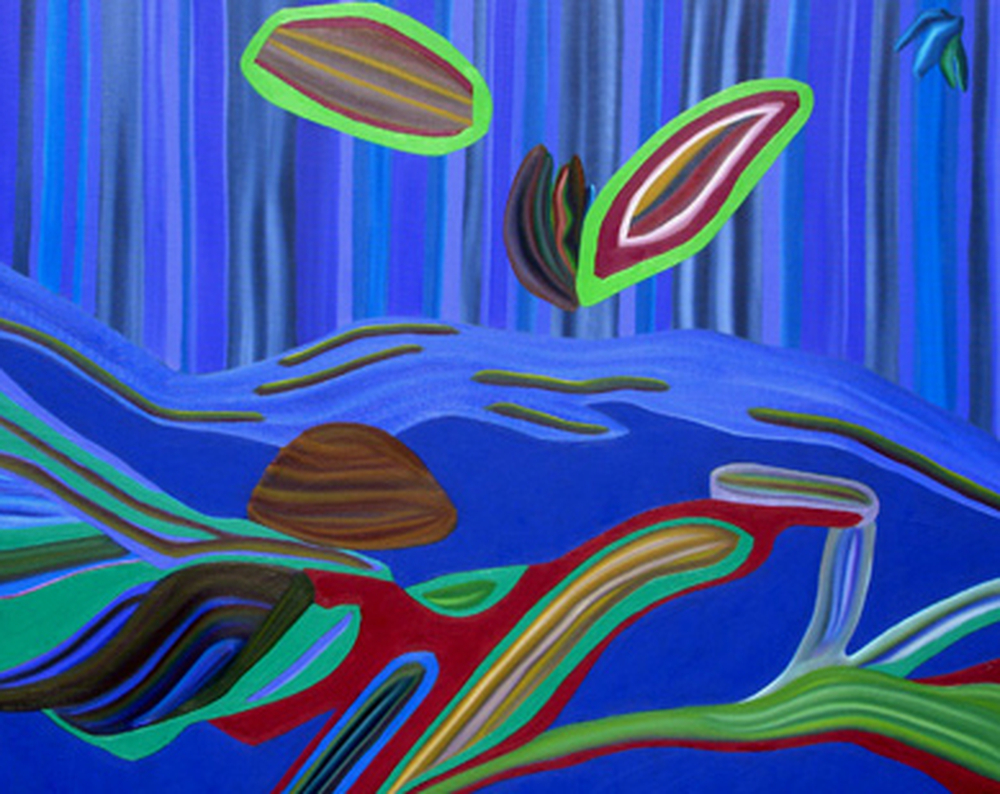
© Camilo Villanueva, Mundos
Oil on canvas
80 × 100 cm
Post Notes
- The above article was translated from Spanish into English with the aid of Google Translate
- Feature image: © Camilo Villanueva, Nacimiento, Oil on canvas, 100 × 80 cm
- Camilo Villanueva’s website
- Rainer Maria Rilke: Letters to a Young Painter
- John Ruskin: On Art and Life
- Mark Rothko: The Artist’s Reality
- Agnes Martin: Writings
- Kahlil Gibran: Poet, Painter, Prophet
- Wassily Kandinsky: Concerning the Spiritual in Art
- The Culturium uses affiliate marketing links via the Amazon Associates Programme