Tolle, lege
“How long shall I go on saying
‘tomorrow, tomorrow’?
Why not now?
Why not make an end
of my ugly sins at this moment?”
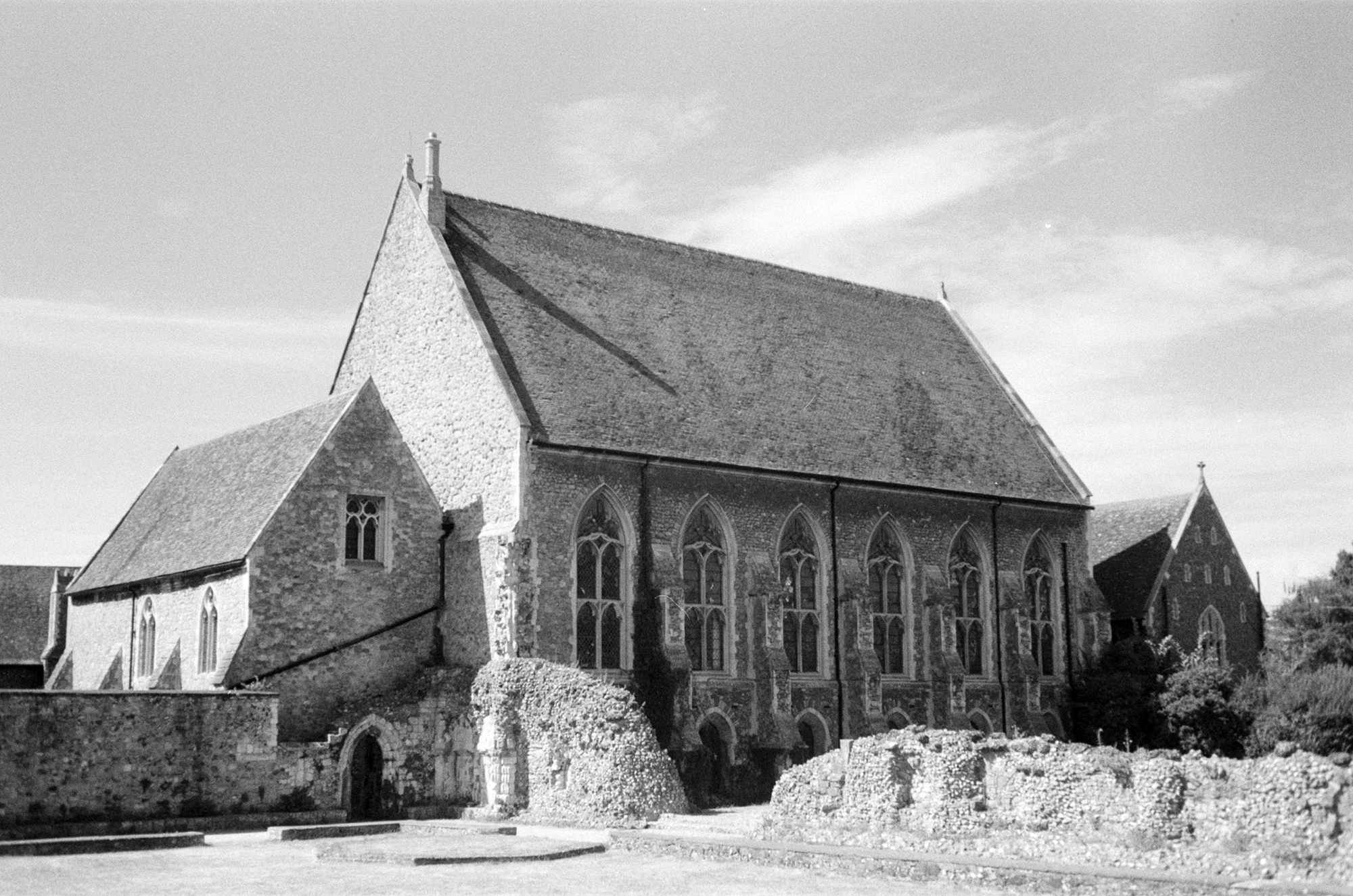
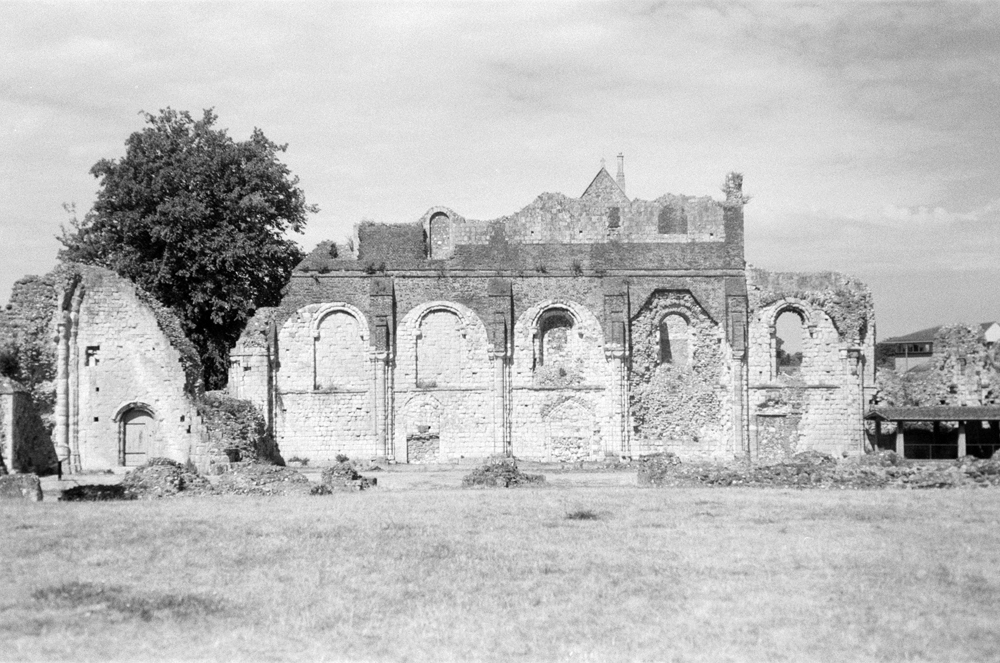
HEAR MY OWN confession. I got my Augustines well and truly confused. Having time to spare whilst visiting friends in north Kent recently, I decided to drive to English Heritage’s St Augustine’s Abbey in Canterbury to imbibe the sacred atmosphere, heatwaves notwithstanding, to see whether I too could undergo any kind of divine revelation whilst strolling around the grounds, in a similar fashion as the saint himself had famously done long ago or so I thought.
Flicking through the glossy brochure, I was soon made aware of my embarrassing error but took comfort from the fact that many people also inadvertently confuse the two men. Augustine of Canterbury (534–604 CE) was born in Rome and sent by Pope Gregory I to propagate Christianity in England, where he founded Canterbury Cathedral (597 CE), becoming its first Archbishop, and then later St Augustine’s Abbey the following year, which soon became an important spiritual centre for over a thousand years. When the monasteries were dissolved in the 16th century, King Henry VIII appropriated the abbey for himself, converting it into a royal palace, which later became an aristocratic residence and then finally a public school.
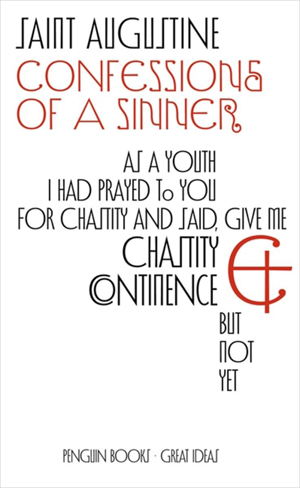
The Augustine closer to my heart hails from Hippo in modern-day Algeria (13th November 354–28th August 430 CE). As a young man growing up in a Roman North African culture, he was intensely ambitious, intellectually restless and sexually active before pursuing Neoplatonism and then Christianity in the role of Bishop of the Church. Known for his famous dictum, “Give me chastity and continence but not yet,” he paradoxically helped to institutionalize a patriarchal conception of women in which misogyny and female subordination were given theological justification, reflecting perhaps his own interior struggles with the opposite sex.
That aside—he was a product of his times after all—Augustine of Hippo left a vast body of tracts, letters, sermons and philosophical dialogues, with his masterwork Confessions (c. 397–400 CE), which explores the nature of sin, epiphany and redemption, being one of the most powerful religious autobiographies ever to be composed.
Despite the fact that he never actually set foot in England himself, I thought of Augustine’s famous passage, “Tolle, lege” [Take it and read], which was also inspired by a stroll in a garden, albeit in distant Milan. In it, Augustine hears a quiet, innocent voice directing him to pick up his Bible and reflect on the verses that first catch his attention. After only reading a handful of words, his soul is illuminated with the peace and understanding he had so desperately sought the entire length of his life.
Sadly I was not blessed with a comparable epiphanic experience as I stood in the ruins—perhaps I needed to be in Italy with a Bible of my own to facilitate it—and yet the stillness of the abbey rendered me irrevocably moved. I was also left holding onto the fact that when there is unequivocal surrender of the process of striving and seeking, the possibility of recognizing one’s true nature has the chance of shining through.
I probed the hidden depths of my soul and wrung its pitiful secrets from it, and when I mustered them all before the eyes of my heart, a great storm broke within me, bringing with it a great deluge of tears. I stood up and left Alypius [Augustine’s closest, lifelong friend] so that I might weep and cry to my heart‘s content, for it occurred to me that tears were best shed in solitude. I moved away far enough to avoid being embarrassed even by his presence. He must have realized what my feelings were, for I suppose I had said something and he had known from the sound of my voice that I was ready to burst into tears. So I stood up and left him where he had been sitting, utterly bewildered. Somehow I flung myself down beneath a fig tree and gave way to the tears which now streamed from my eyes, the sacrifice that is acceptable to you. I had much to say to you, my God, not in these very words but in this strain: Lord, will you never be content? Must we always taste your vengeance? Forget the long record of our sins. For I felt that I was still the captive of my sins, and in my misery I kept crying, ‘How long shall I go on saying “tomorrow, tomorrow”? Why not now? Why not make an end of my ugly sins at this moment?’
I was asking myself these questions, weeping all the while with the most bitter sorrow in my heart, when all at once I heard the sing-song voice of a child in a nearby house. Whether it was the voice of a boy or a girl I cannot say, but again and again it repeated the refrain ‘Take it and read, take it and read’ [‘Tolle, lege, tolle, lege’]. At this I looked up, thinking hard whether there was any kind of game in which children used to chant the words like these, but I could not remember ever hearing them before. I stemmed my flood of tears and stood up, telling myself that this could only be a divine command to open my book of Scripture and read the first passage on which my eyes should fall. For I had heard the story of Antony, and I remembered how he had happened to go into a church while the Gospel was being read and had taken it as a counsel addressed to himself when he heard the words Go home and sell all that belongs to you. Give it to the poor, and so the treasure you have shall be in heaven; then come back and follow me. By this divine pronouncement he had at once been converted to you.
So I hurried back to the place where Alypius was sitting, for when I stood up to move away I had put down the book containing Paul’s Epistles. I seized it and opened it, and in silence I read the first passage on which my eyes fell: Not in revelling and drunkenness, not in lust and wantonness, not in quarrels and rivalries. Rather, arm yourselves with the Lord Jesus Christ; spend no more thought on nature and nature‘s appetites. I had no wish to read more and no need to do so. For in an instant, as I came to the end of the sentence, it was as though the light of confidence flooded into my heart and all the darkness of doubt was dispelled.
—St Augustine, Confessions of a Sinner [being an abridged version of Confessions], Book VIII, Chapter 12
Post Notes
- Images: © Paula Marvelly, St Augustine’s Abbey
- Vladimir Lossky: Eckhart’s Apophatic Theology
- Dag Hammarskjöld: Markings
- Julian of Norwich: Revelations of Divine Love
- The Cloud of Unknowing
- Teresa of Ávila: The Ecstasy of Love
- Hildegard of Bingen: Sibyl of the Rhine
- William Blake: All Religions Are One
- Michael Molinos: The Spiritual Guide
- The Culturium uses affiliate marketing links via the Amazon Associates Programme