A fantastic story
“When they come to take her away tomorrow,
what will I do?”
WITH ALL THE wildfires currently ravaging Europe, my mind has returned to the time when I lived for several years in a caravan just outside Nice in the south of France. With no companion for comfort whatever the weather, my only bedfellows were the literary tomes I had brought with me, specifically Fyodor Dostoyevsky’s The Brothers Karamazov. I figured the loneliness and solitude would somehow force me to read the classic literature I had been vowing to consume ever since I could possibly remember with the hope that I would finally do so long before I popped my proverbial clogs.
Despite my good intentions, the Dostoyevsky (11th November 1821–9th February 1881) remained untouched on my desk for several months. I had read somewhere that it would irrevocably change me so held back for fear of having to endure yet another intense psychological shift in my conditioning before feeling I was in a place to undergo such an earth-shattering event. Suffice to say, it was a life-changing experience, as anyone who has read Dostoyevsky can attest to, especially when one remembers that the novelist himself had spent four years in a Siberian prison camp prior to composing the text.
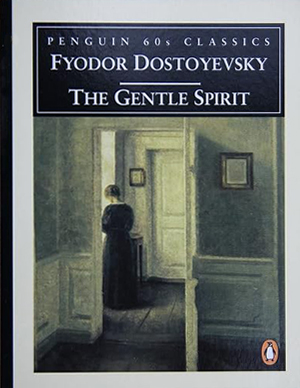
Today’s offering is much more manageable—my Penguin 60s Classics pocketbook runs to only 86 tiny pages (and for the princely sum of 60 pence!)—although the theme is similarly devastating. Written in 1876 and also translated as A Gentle Creature or The Meek One, The Gentle Spirit is one of Dostoyevsky’s most haunting shorter works. Beginning with the shocking knowledge that a young woman has just died by throwing herself, Tosca-esque, out of the window, the novella unfolds in a feverish, fragmented monologue delivered by her pawnbroker widower as he keeps retracing the events of their marriage again and again and again, convincing himself he acted honourably, only for cracks in his own account to reveal a far darker reality of what actually came to pass.
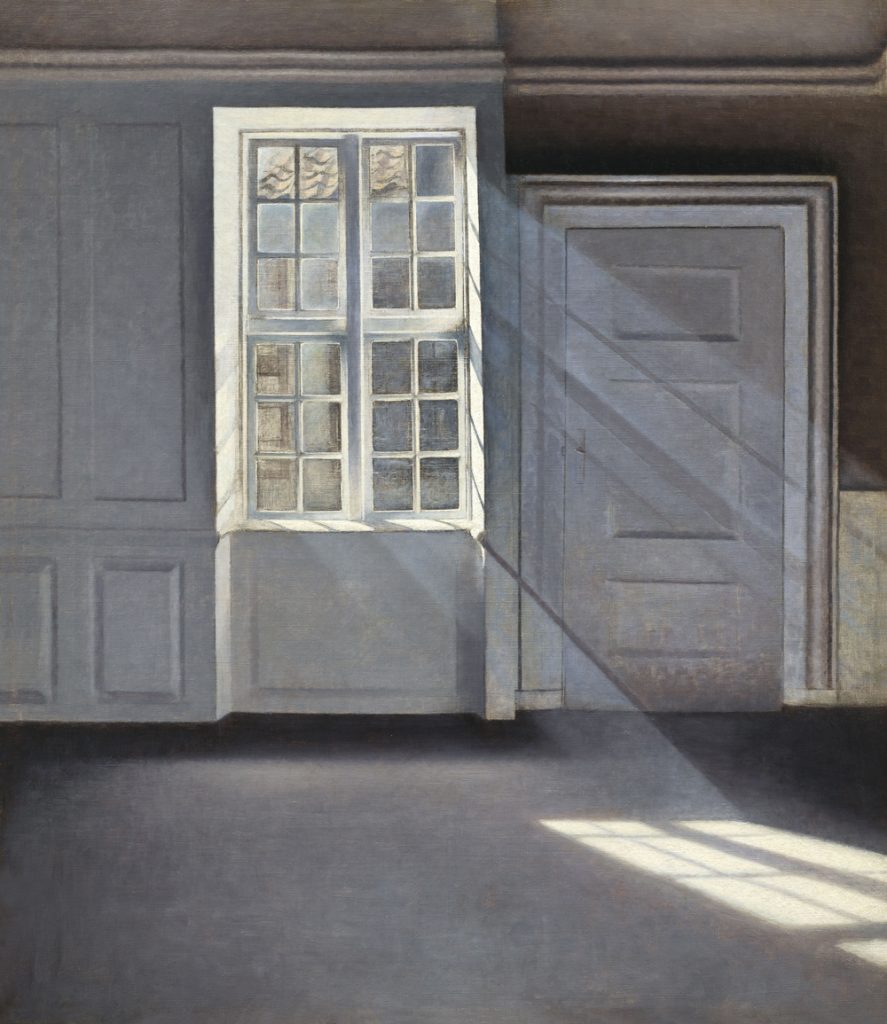
Vilhelm Hammershøi,
Dust Motes Dancing in Sunbeams
Although I have never been married myself, I can well imagine the death by a thousand cuts of a longterm, legally binding relationship that is significantly lacking in affection. Indeed, the brilliance of Dostoyevsky’s prose is the continuous attention to the most subtlest of details—the scuff of a shoe on the carpet, singing as an act of happy defiance, the slurp of tea from the living room samovar—that signal the seething, unspoken currents of irritation and anger lurking between them, interspersed with the most passive aggressive act of marital weaponry of all: silence.
The husband never consciously admits he was cruel and manipulative. Instead, the reader gradually realizes, through Dostoyevsky’s superlative use of the unreliable narrator, that his pride, emotional coldness and need for control ultimately suffocated his young wife. When he himself has a moment of revelation and tries to save the marriage, his fervour and intensity is such that it scares her even further to the extent that her only option is to take her own life.
Despite his confession, we can still feel how the husband sees his wife primarily in relation to himself—as someone to save, to possess, to educate, to be a reflection of himself. His tragedy is that he never truly encounters her as another conscious being until it is far too late and she has committed suicide. In that sense, the novella is not just about failed matrimony but the blindness created by the self-centred mind living within the confines of its own ego, incapable of recognizing another. The Gentle Spirit is, therefore, a masterpiece of self-deception and a potent reminder of how not to treat one’s spouse, a loved one, a friend or anyone else who walks upon this blessed earth.
… spring was coming, we were now halfway into April; we took out the double window-frames, and the sun began to brighten our silent rooms with brilliant pencils of light. But scales hung before my eyes and obscured my mind. Fateful, terrible scales! How did it come to pass that they fell away and I suddenly began to see clearly and understand everything? Was it an accident, or did some appointed day arrive when the sun’s rays kindled a thought and a conjecture in my torpid mind? No there was no thought, no conjecture—it was a nerve that suddenly started to play up, a nerve that had grown numb quivered, came to life and illuminated all my torpid soul and the devilish pride it contained. At the time, it was as if I’d suddenly leapt to my feet. It happened instantly and without warning, as evening was approaching, at about 5 o’clock, after dinner …
Post Notes
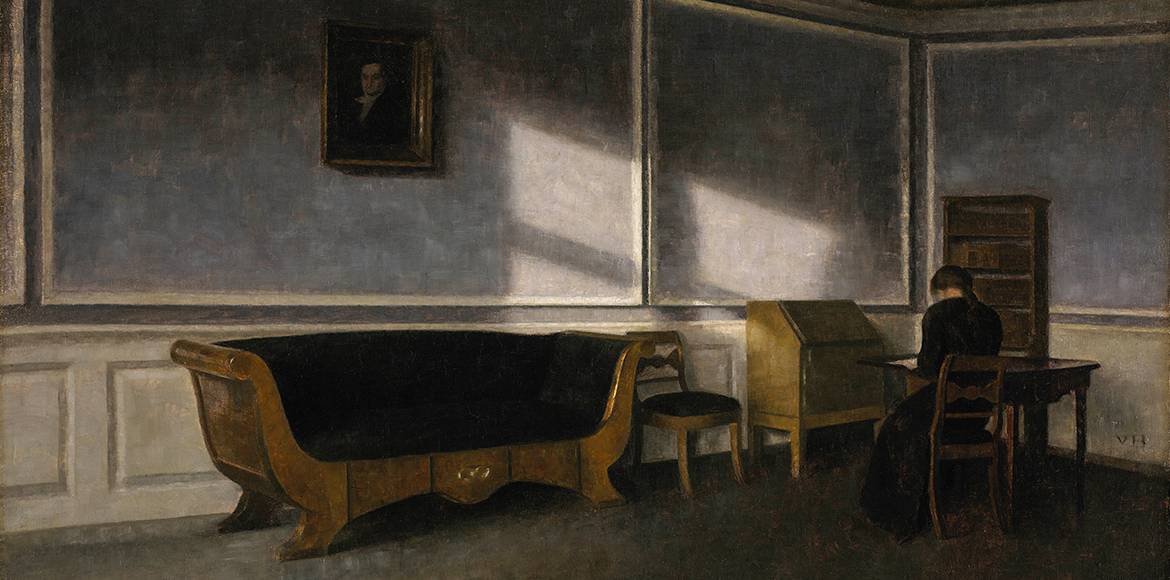
- Feature image: Vilhelm Hammershøi, Sunshine in the Drawing Room, Public Domain
- Akira Kurosawa: Ikiru
- Arseny Tarkovsky: Life, Life
- Leo Tolstoy: The Three Hermits
- Leo Tolstoy: A Confession
- Leo Tolstoy: What Is Art?
- Seneca: On Tranquillity of Mind
- Michel de Montaigne: On Solitude
- Rousseau: Meditations of a Solitary Walker
- The Culturium uses affiliate marketing links via the Amazon Associates Programme