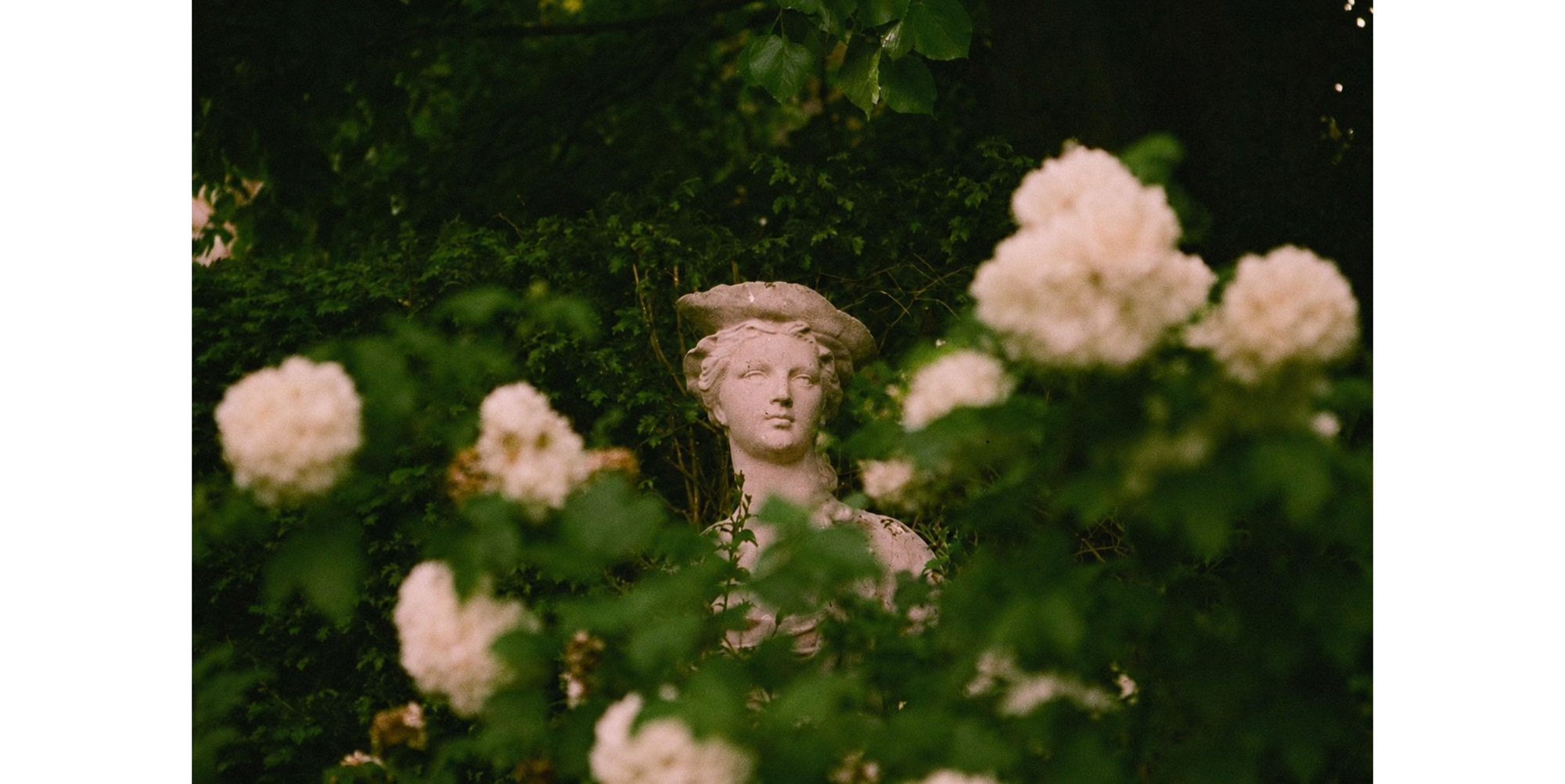
Solace and scourge
Monk’s House
“I am impressed by the transitoriness of human life
to such an extent that I am often saying a farewell.”
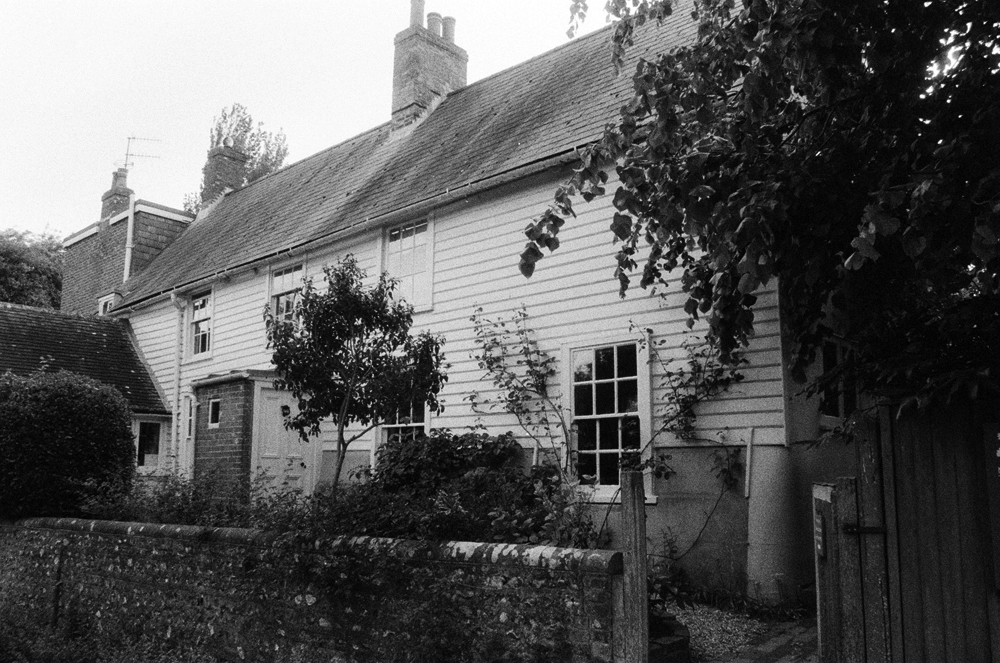
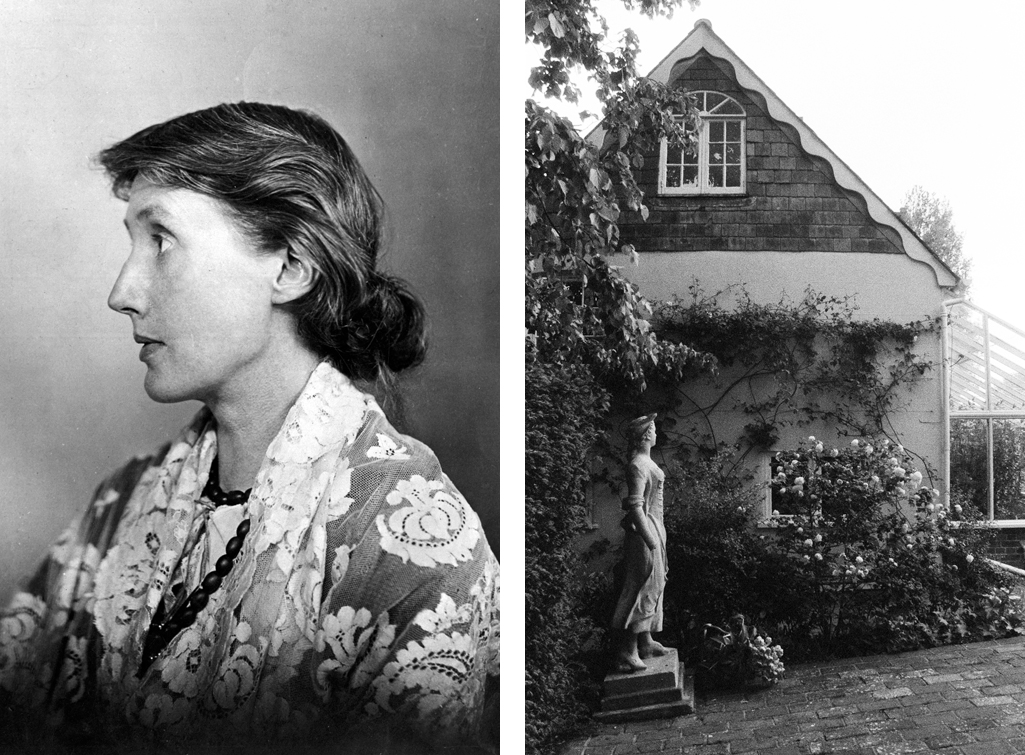
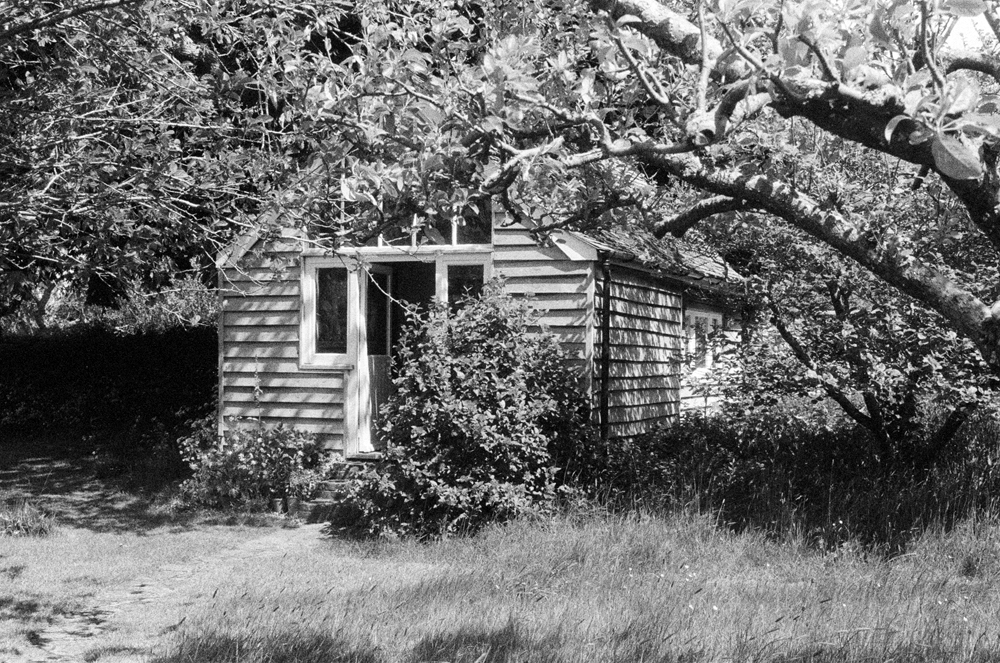
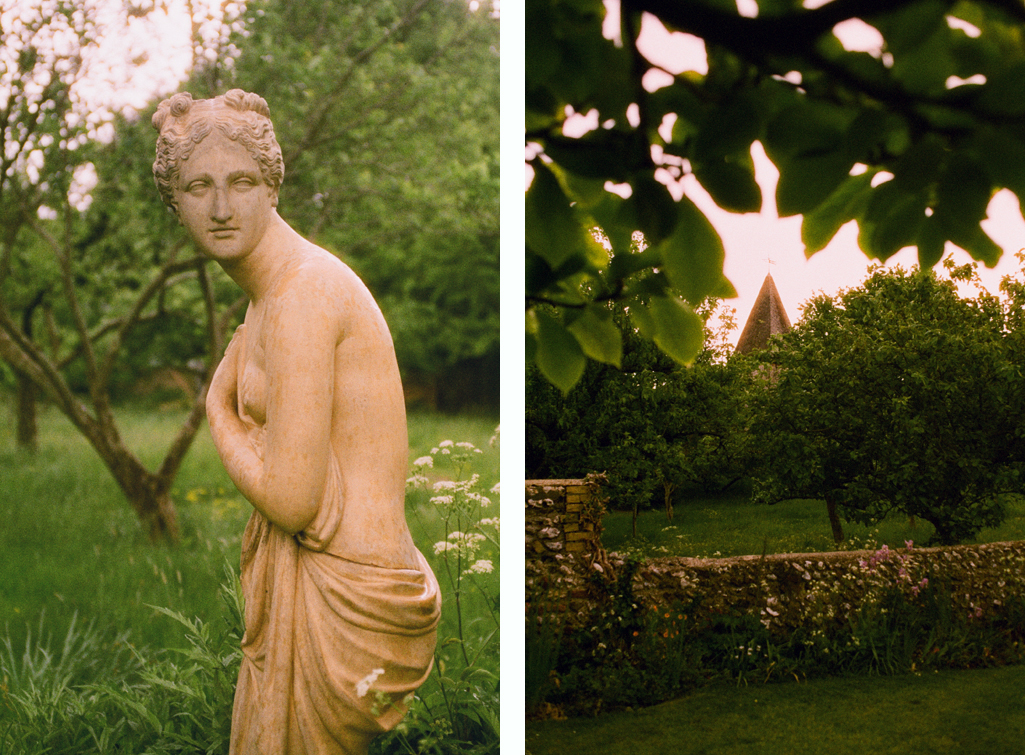
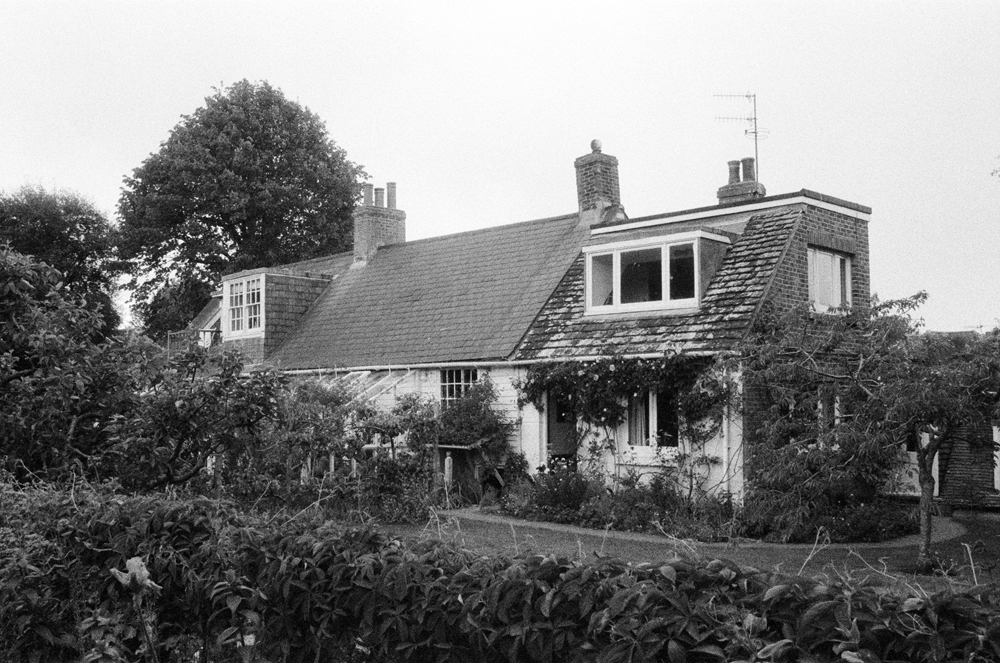
MONK’S HOUSE IN Rodmell, near Lewes, East Sussex, was the country retreat of British writer Virginia Woolf (25th January 1882–28th March 1941) and her husband, Leonard. I try and make a pilgrimage every year to their “unpretending” clapboard cottage nestled in the South Downs, now owned by the National Trust, in order to breathe in the hallowed air of their literary and horticultural sanctuary.
The Woolfs had lived in a series of properties throughout the south-east during their marriage but bought Monk’s House in 1919, moving in during September as a place to go at weekends and where they could read, write, garden and go for long walks. When the London Blitz almost obliterated their Mecklenburgh Square home in 1940, the couple made Monk’s House their sole residence until Virginia’s tragic suicide the following year.
It was here that Virginia composed many of her most acclaimed works—Mrs Dalloway (1925), To the Lighthouse (1927), Orlando (1928) and The Waves (1931)—as well as keeping a regular diary, which she wrote from 1915 until four days before her death. As compelling as her novels, they reveal the inner struggles she endured both as a literary artist and as someone who suffered with crippling anxiety and depression throughout the entire course of her life.
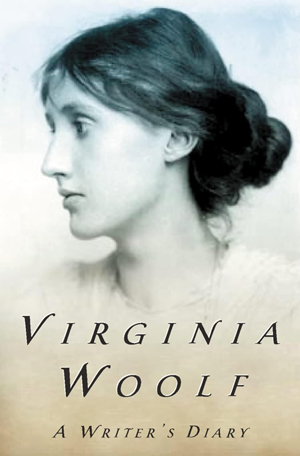
In A Writer’s Diary (1954), posthumously compiled and edited by Leonard, Virginia gives for 27 years a consecutive record of what she did, the people with whom she met (and especially confiding how she felt about them), together with her thoughts about herself, about life, and about the books she was writing and hoped to write. She inscribed on “large post quarto” blank sheets of paper, which were originally clipped together with loose-leaf rings but later bound, using coloured, patterned Italian paper for the cover. When she died, Virginia left 26 such volumes of diary written in her own hand.
Living at Monk’s House enabled Virginia to structure her day for maximum productivity and focus. Mornings were sacred and devoted to writing fiction or reviews. The time around lunch was reserved for revising, reading proofs, going for walks or typesetting for the Hogarth Press, the Woolf’s very own publishing house. Late afternoons was set aside for letter-writing and working on her diaries. Evenings were reserved for reading and entertaining guests, such as E.M. Forster, T.S. Eliot, Vita Sackville-West, John Maynard Keynes, Vanessa Bell, Lytton Strachey, Roger Fry and Duncan Grant.
In her diaries, Virginia candidly admitted that her writing life was tortuous but conceded that daily routines were the only way to handle the intense psychological burden of her craft. Indeed, a strict schedule prevented the “tyranny of moods”, allowing her to work even if her muse was decidedly absent. The result of her labours and self-sacrifice was a body of luminous, mystical prose, the likes of which, in my humble opinion, have never been witnessed since.
Tuesday, May 11th, 1920
It is worth mentioning, for future reference, that the creative power which bubbles so pleasantly in beginning a new book quiets down after a time, and one goes on more steadily. Doubts creep in. Then one becomes resigned. Determination not to give in, and the sense of an impending shape keep one at it more than anything. I’m a little anxious. How am I to bring off this conception? Directly one gets to work one is like a person walking, who has seen the country stretching out before. I want to write nothing in this book that I don’t enjoy writing. Yet writing is always difficult.
Thursday, August 18th, 1921
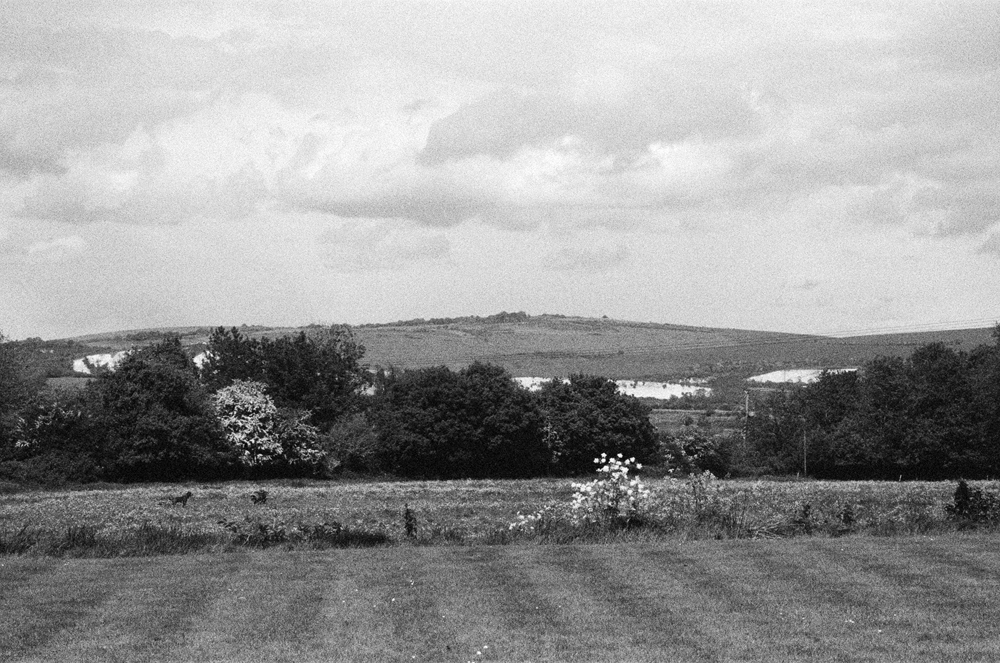
Nothing to record; only an intolerable fit of the fidgets to write away. Here I am chained to my rock; forced to do nothing; doomed to let every worry, spite, irritation and obsession scratch and claw and come again. This is a day that I may not walk and must not work. Whatever book I read bubbles up in my mind as part of an article I want to write. No one in the whole of Sussex is so miserable as I am; or so conscious of an infinite capacity of enjoyment hoarded in me, could I use it. The sun streams (no, never streams; floods rather) down upon all the yellow fields and the long low barns; and what wouldn’t I give to be coming through Firle woods, dirty and hot, with my nose turned home, every muscle tired and the brain laid up in sweet lavender, so sane and cool, and ripe for the morrow’s task. How I should notice everything—the phrase for it coming the moment after and fitting like a glove; and then on the dusty road, as I ground my pedals, so my story would begin telling itself; and then the sun would be down; and home, and some bout of poetry after dinner, half read, half lived, as if the flesh were dissolved and through it the flowers burst red and white. There! I’ve written out half my irritation. I hear poor L. [Leonard Woolf] driving the lawn mower up and down, for a wife like I am should have a latch to her cage. She bites! And he spent all yesterday running around London for me. Still if one is Prometheus, if the rock is hard and the gadflies pungent, gratitude, affection, none of the nobler feelings have sway. And so this August is wasted.Only the thought of people suffering more than I do at all consoles; and that is an aberration of egotism, I suppose. I will now make out a time table if I can to get through these odious days.
Monday, September 13th, perhaps, 1925
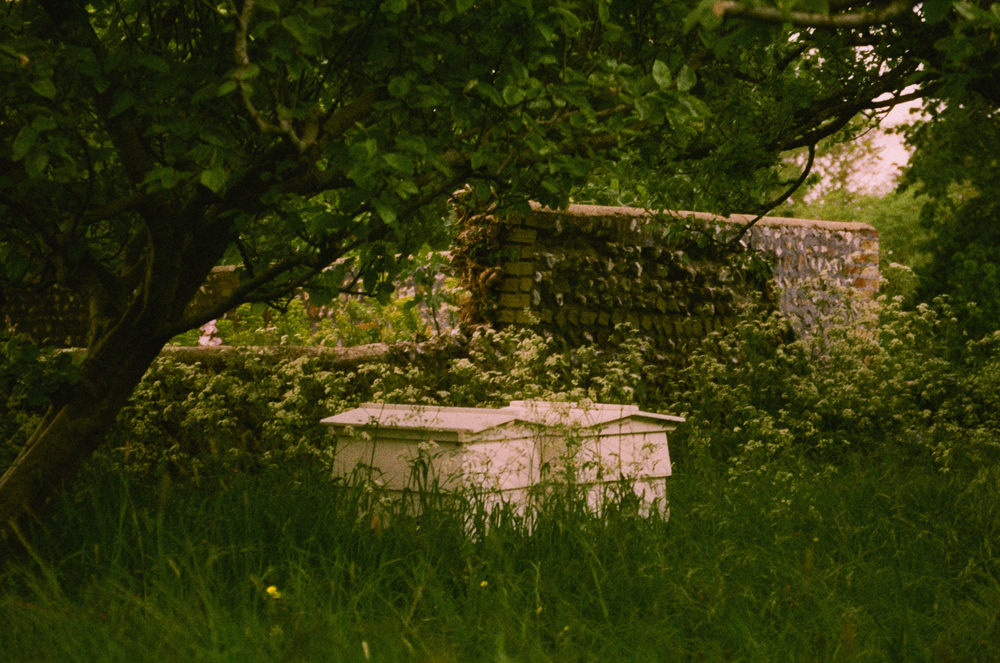
A disgraceful fact—I am writing this at 10 in the morning in bed in the little room looking into the garden, the sun beaming steady, the vine leaves transparent green, and the leaves of the apple tree so brilliant that, as I had my breakfast, I invented a little story about a man who wrote a poem, I think, comparing them with diamonds, and the spiders’ webs, (which glance and disappear astonishingly) with something or other else; which led me to think of [Andrew] Marvell on a country life, so to [Robert] Herrick and the reflection that much of if was dependent upon the town and gaiety—a reaction. However, I have forgotten the facts. I am writing this partly to test my poor bunch of nerves at the back of my neck—will they hold or give again, as they have done so often?—for I’m amphibious still, in bed and out of it; partly to glut my itch (‘glut’ an ‘itch’!) for writing. It is the great solace and scourge.
Thursday, September 30th, 1926
I wished to add some remarks to this, on the mystical side of this solicitude; how it is not oneself but something in the universe that one’s left with. It is this that is frightening and exciting in the midst of my profound gloom, depression, boredom, whatever it is. One sees a fin passing far out. What image can I reach to convey what I mean? Really there is none, I think. The interesting thing is that in all my feeling and thinking I have never come up against this before. Life is, soberly and accurately, the oddest affair; has in it the essence of reality. I used to feel this as a child—couldn’t step across a puddle once, I remember, for thinking how strange—what am I? etc. But by writing I don’t reach anything. All I mean to make is a note of a curious state of mind. I hazard the guess that it may be the impulse behind another book [perhaps The Waves or Moths]. At present my mind is totally blank and virgin of books. I want to watch and see how the idea at first occurs. I want to trace my own process.
Friday, January 4th, 1929
Now is life very solid or very shifting? I am haunted by the contradictions. This has gone on for ever; will last for ever; goes down to the bottom of the world—this moment I stand on. Also it is transitory, flying, diaphanous. I shall pass like a cloud on the waves. Perhaps it may be that though we change, one flying after another, so quick, so quick, yet we are somehow successive and continuous we human beings, and show the light through. But what is the light? I am impressed by the transitoriness of human life to such an extent that I am often saying a farewell—
Friday, April 9th, 1937
‘Such happiness wherever it is known is to be pitied for tis surely blind.’ Yes, but my happiness isn’t blind. That is the achievement, I was thinking between 3 and 4 this morning, of my 55 years. I lay awake so calm, so content, as if I’d stepped off the whirling world into a deep blue quiet space and there open eye existed, beyond harm; armed against all that can happen. I have never had this feeling before in all my life; but I have had it several times since last summer: when I reached it, in my worst depression, as I stepped out, throwing aside a cloak, lying in bed, looking at the stars, these nights at Monk’s House. Of course, it ruffles, in the day, but there it is …
Writers & Artists Spirituality Series
Post Notes
- All images: © Paula Marvelly, Monk’s House, except portrait of Virginia Woolf by Unknown
- Monk’s House, National Trust
- Writers & Artists Spirituality Series
- Virginia Woolf: A Room of One’s Own
- The Spirituality of Duncan Grant
- T. S. Eliot: A Man Out of Time
- E. M. Forster: The Celestial Omnibus
- Kathleen Raine: The Land Unknown
- Paula Marvelly: The Sacred Feminine Through the Ages
- The Culturium uses affiliate marketing links via the Amazon Associates Programme