The great game of life
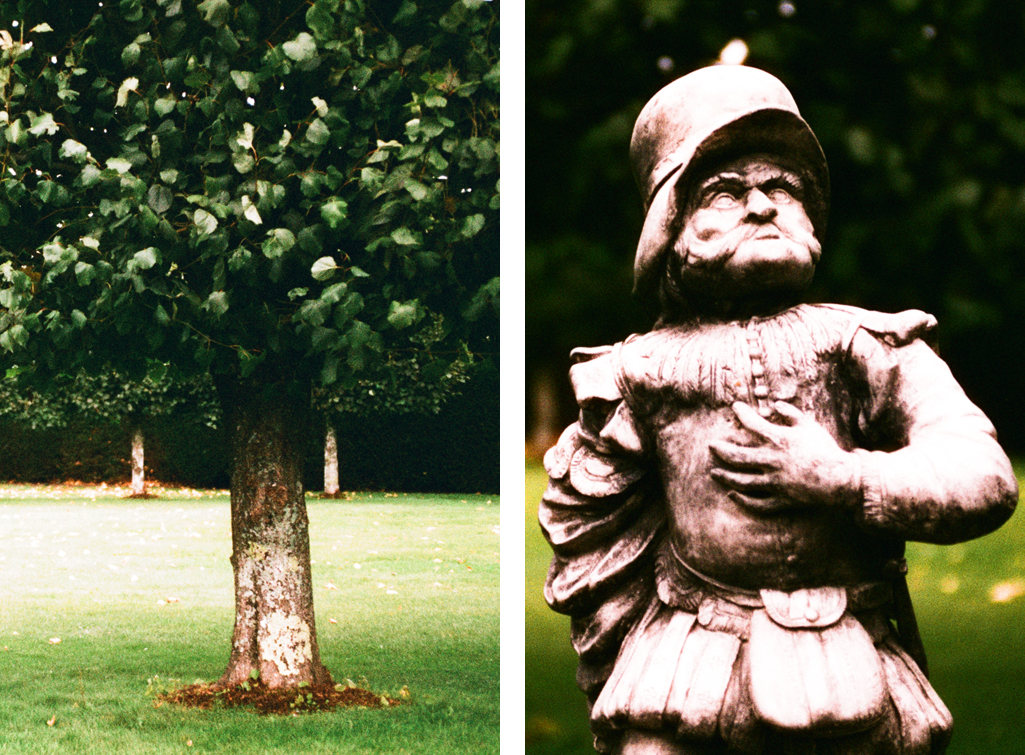
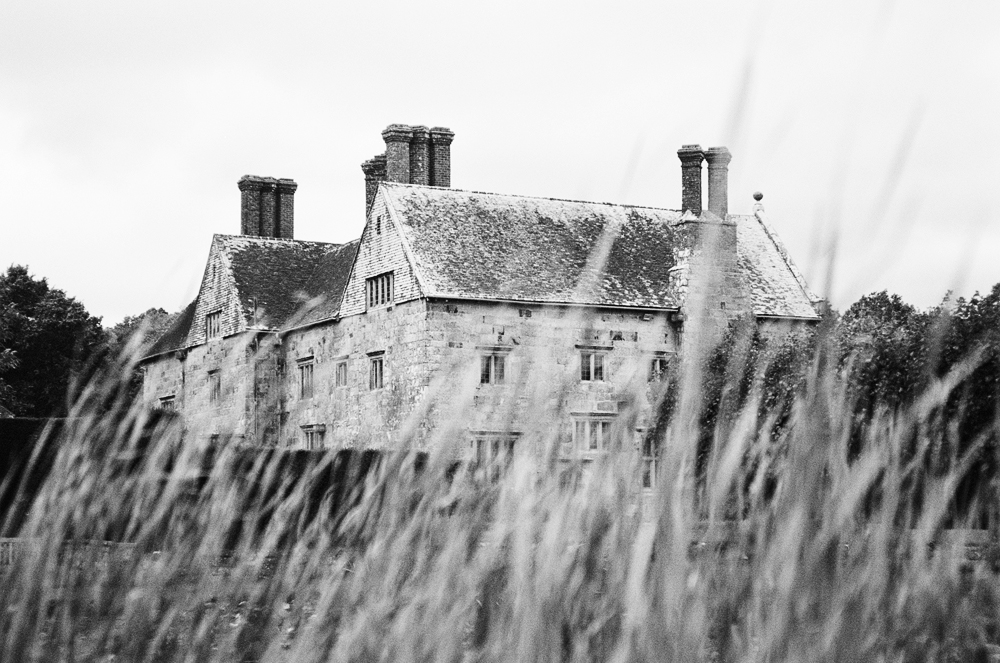
Bateman’s
“Take anything and everything seriously
except yourselves.”
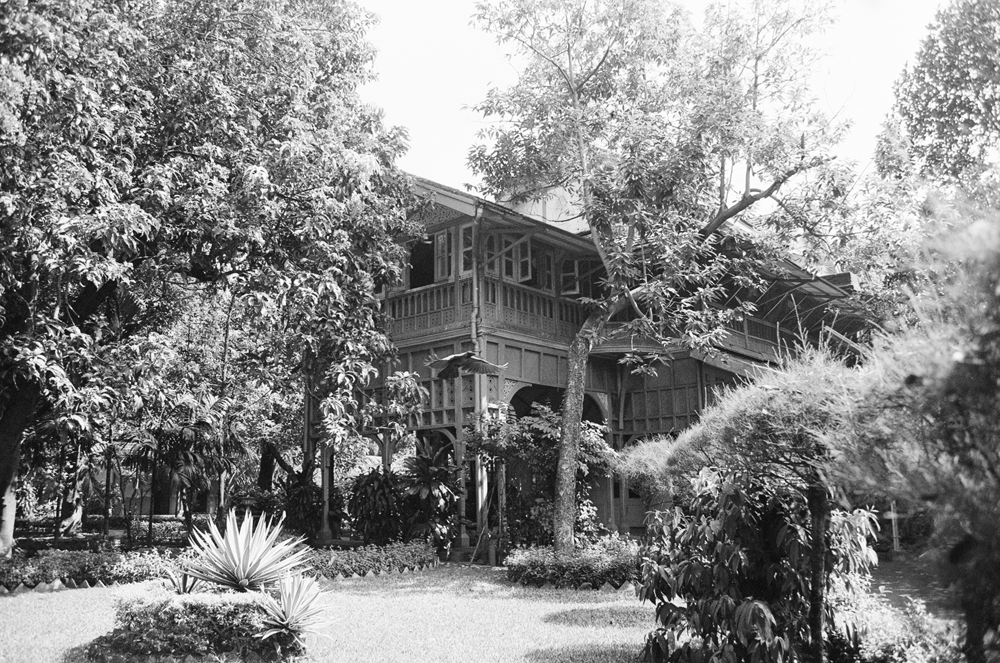
I HAD COMPLETELY forgotten that I had visited the bungalow of Rudyard Kipling in Mumbai during my late twenties until I found a strip of negatives of my Indian excursion whilst recently decluttering my bedroom wardrobe. Approaching my seventh decade on this planet, I feel I am consumed with thoughts about the past and wasted opportunities, Googling acquaintances from my university days whose lives have seemingly unfolded much more significantly than mine, and wondering if I will ever have enough money in my proverbial pension pot to see me through to the end of my days.
Over the years, I have also lost count of the number of times I have tried to read Kipling’s masterpiece Kim yet failed—the tale of an orphaned boy’s spiritual devotion to a Tibetan lama, to whom the titular protagonist famously asks, “I am Kim. I am Kim. And what is Kim?”—however a recent trip to Bateman’s, Kipling’s principal family home nestled in the depths of the East Sussex countryside, coupled with the discovery of my nostalgic cache of celluloid, has served to inspire me to revisit the Nobel laureate’s life and work.

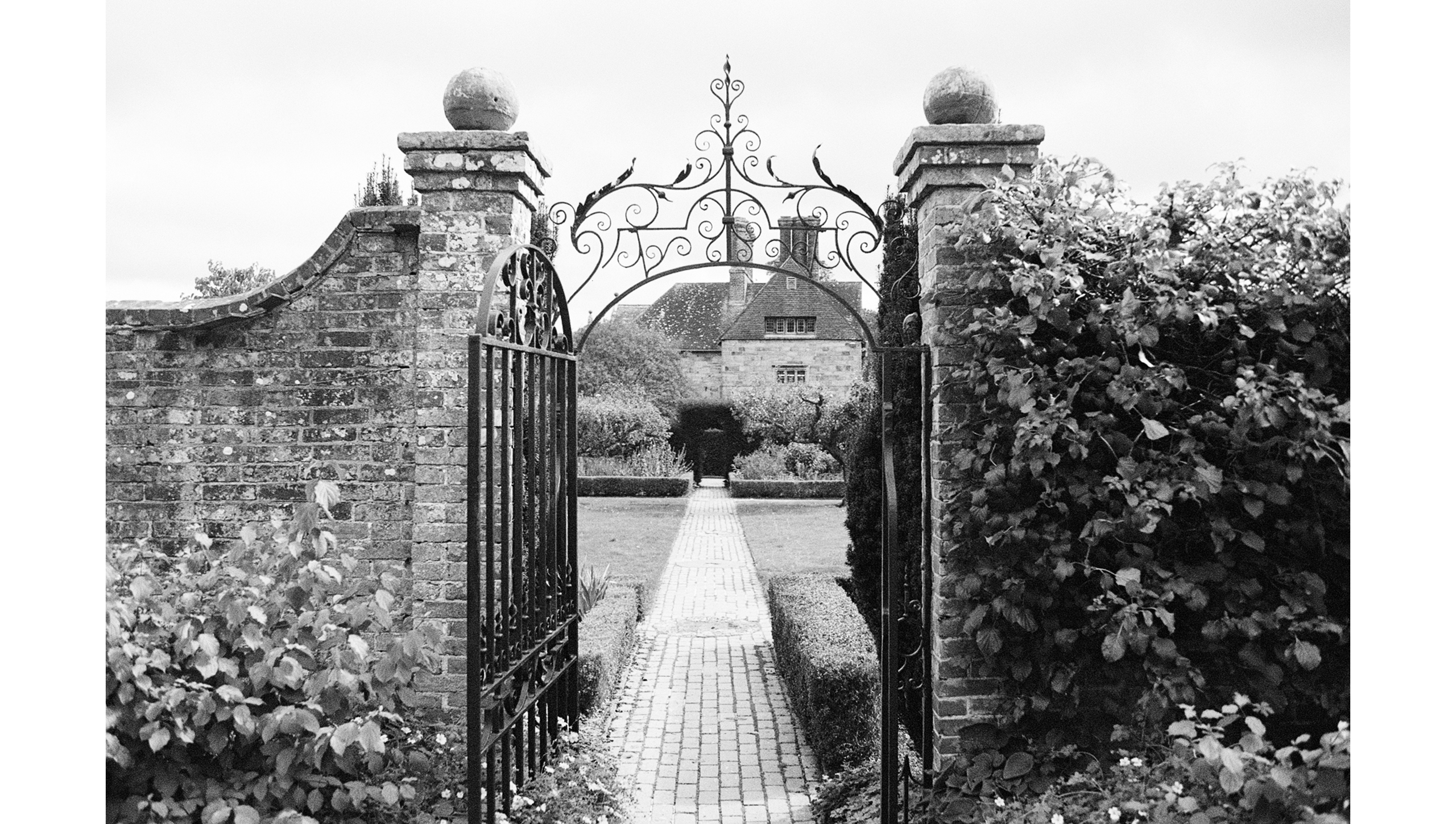
As part of The Culturium’s Spirituality Series, my interest in creatives from the South East is driven by a fascination for how the environment in which they resided impacted upon their craft. Coined “a good and peaceable place” by Kipling himself, Bateman’s is located in the rural hamlet of Burwash in the High Weald Area of Outstanding Natural Beauty, characterized by its chocolate box cottages and green rolling hills, being the very embodiment of Rudyard’s ideal—and mine, for that matter—of an Arcadian English life.
Already world famous for The Jungle Book (1894), Stalky & Co. (1899) and Kim (1901), Kipling and his wife, Caroline, sought sanctuary far from the glare of increasing public attention and a place to grieve the devastating loss of their beloved elder daughter, Josephine, to pneumonia at the tender age of six. Despite lacking the most basic of modern conveniences, such as modern plumbing and electricity, the setting was perfectly situated in the gently sloping, wooded landscape of the Dudwell valley, where Kipling would tend to his ornamental gardens, vegetable patches and apple orchards as well as eventually installing herds of Guernsey dairy cows, Sussex beef cattle and even pigs on what would grow to be a vast 300-acre estate.
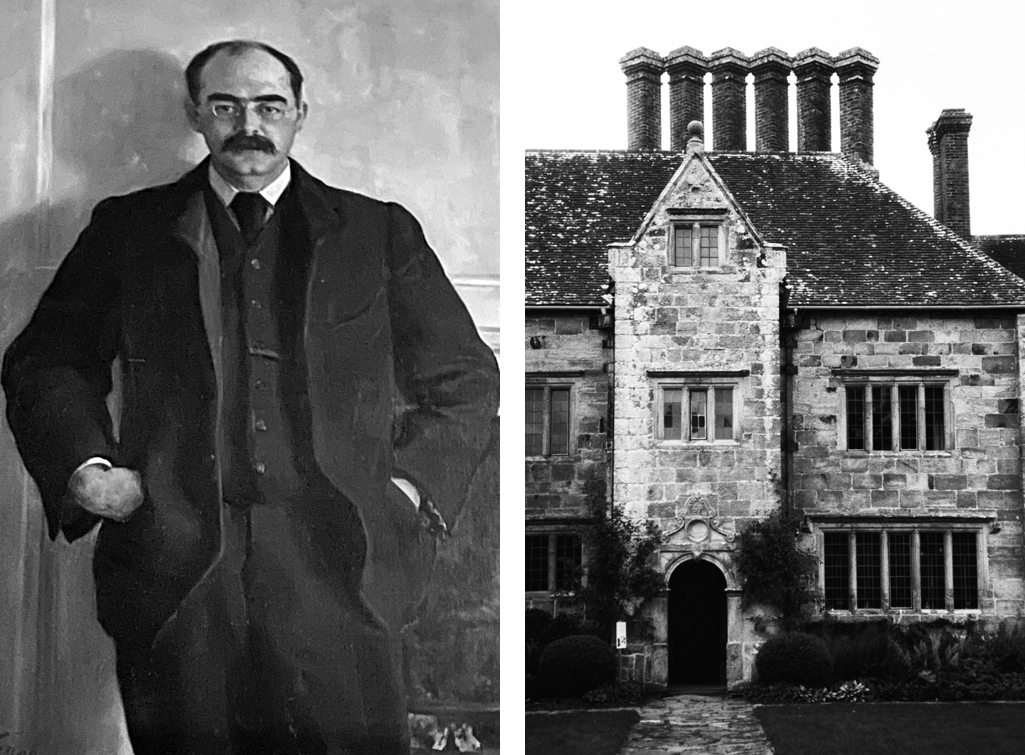
Rudyard Kipling (30th December 1865–18th January 1936) was born in Mumbai into an illustrious artistic family—son of John Lockwood Kipling, a British sculptor, illustrator and art educator who served as a professor at Mumbai’s Sir Jamsetjee Jeejeebhoy (JJ) School of Art, and Alice MacDonald, whose sisters married the painters Edward Burne-Jones (Georgiana) and E.J. Poynter (Agnes), and the iron master and politician Alfred Baldwin (Louisa).
At the age of only five, Kipling was sent to England in accordance with the common practice for British colonial children. As his parents wanted him to receive a proper British education, believing the harsh, tropical climate of India was unhealthy for young developing minds, Rudyard and his younger sister, Alice “Trix” Kipling (who would go on to become an accomplished writer herself), were left under the care of a foster family in Southsea, Portsmouth. Unfortunately, the experience was utterly traumatic for both of them—their foster mother was abusive, leaving lasting scars on the siblings’ childhoods, inspiring Rudyard later in life to draw on this dark period of his upbringing in his semi-autobiographical story, Baa Baa, Black Sheep (1888).
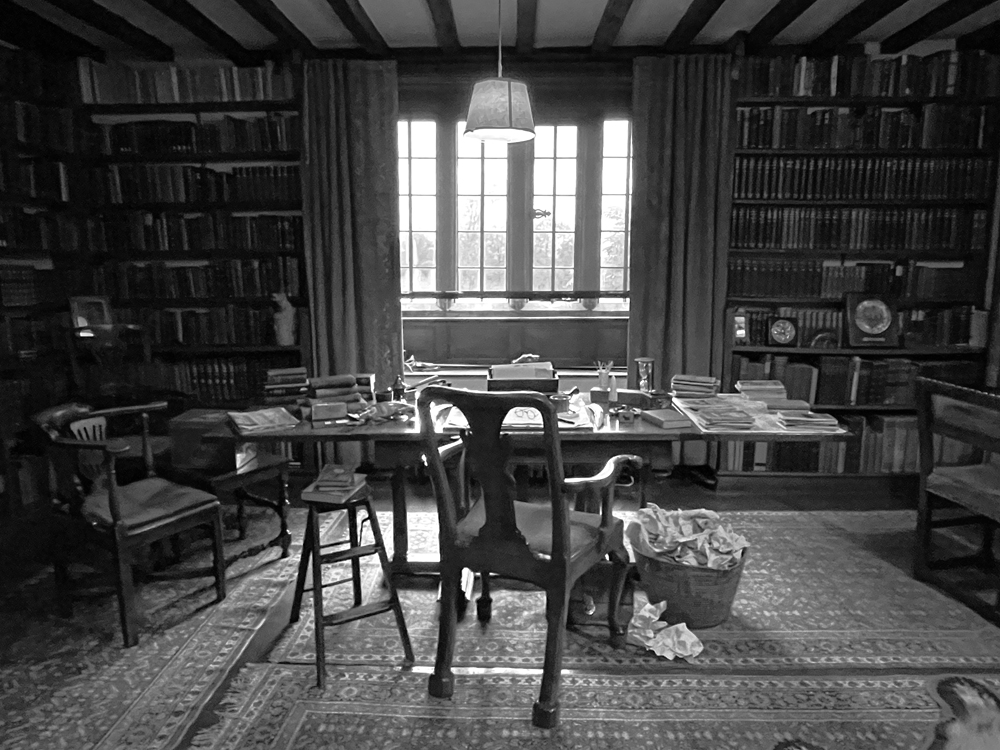
After moving on to Torquay, Devon, and then returning to India, where he forged a reputation as a journalist, Kipling came back to England permanently, determined to work as a serious writer, moving into Bateman’s in 1902 with Caroline and their two young children, Elsie and John, where he would continue to establish a powerful literary voice. Built in 1634, the Jacobean sandstone manor house, with its oak beams, Persian rugs and mullioned windows, provided a much needed retreat for this quintessential British man of letters, not least his private study, always laced with the pungent aroma of Turkish tobacco and where he wrote daily by hand at a 17th-century walnut refectory table (“my dunghill”), screwing up discarded drafts into a large wastebasket, which were burnt every evening in the hallway fireplace.
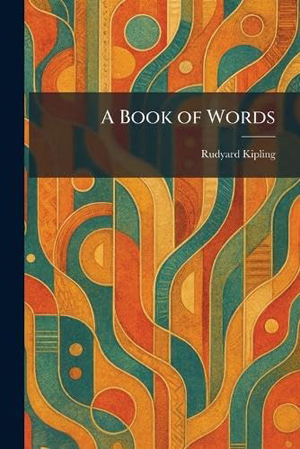
As well as writing novels, short stories and poetry (no one can forget his poem “If”), Kipling was an avid and popular speaker, giving addresses at a diverse range of settings, from university halls to military gatherings and literary societies, the texts being published together in A Book of Words. Delivered between 1906 and 1927, the speeches are an intimate look at the author’s intellectual landscape and articulate public persona, providing an exploration of his views on literature, the duties of the individual, the importance of history and the intricacies of the British Empire. One particular essay, “Values in Life”, given to students at McGill University in Montreal, Canada, on 17th October 1907, where he was awarded an honorary Doctor of Laws (LL.D.) degree, is especially profound surrounding issues close to my own heart—money—and is reproduced in full below.
PRINCIPAL PETERSON; most-learned fellow-Doctors; and You, discreet and well-conducted Students of our University: According to the ancient and laudable custom of the schools, I, as one of your wandering scholars returned, have been instructed to speak to you. The only penalty youth must pay for its enviable privilege is that of listening to people known, alas, to be older and alleged to be wiser. On such occasions youth feigns an air of polite interest and reverence, while age tries to look virtuous. Which pretences sit uneasily upon both of them. On such occasions very little truth is spoken. I will try not to depart from the convention. I will not tell you how the sins of youth are due very largely to its virtues; how its arrogance is most often the result of its innate shyness; how its brutality is the outcome of its natural virginity of spirit. These things are true, but your preceptors might object to such texts without the proper notes and emendations. But I can try to speak to you more or less truthfully on certain matters to which you may give the attention and belief proper to your years.
When, to use a detestable phrase, you go out into ‘the battle of life’ you will be confronted by an organized conspiracy which will try to make you believe that the world is governed by the idea of wealth for wealth’s sake, and that all means which lead to the acquisition of that wealth are, if not laudable, at least expedient. Those of you who have fitly imbibed the spirit of our University—and it was not a materialistic University which trained a scholar to take both the Craven and the Ireland in England [the two most prestigious and highly coveted classical scholarships at the University of Oxford, awarded for outstanding mastery of the Greek and Latin languages]—will violently resent that thought; but you will live and eat and move and have your being in a world dominated by that thought. Some of you will probably succumb to the poison of it.
Now, I do not ask you not to be carried away by the first rush of the great game of life. That is expecting you to be more than human. But I do ask you, after the first heat of the game, that you draw breath and watch your fellows for a while. Sooner or later, you will see some man to whom the idea of wealth as mere wealth does not appeal, whom the methods of amassing that wealth do not interest, and who will not accept money if you offer it to him at a certain price.
At first you will be inclined to laugh at this man and to think that he is not ‘smart’ in his ideas. I suggest that you watch him closely, for he will presently demonstrate to you that money dominates everybody except the man who does not want money. You may meet that man on your farm, in your village, or in your legislature. But be sure that, whenever or wherever you meet him, as soon as it comes to a direct issue between you, his little finger will be thicker than your loins. You will go in fear of him: he will not go in fear of you. You will do what he wants: he will not do what you want. You will find that you have no weapon in your armoury with which you can attack him; no argument with which you can appeal to him. Whatever you gain, he will gain more.
I would like you to study that man. I would like you better to be that man, because from the lower point of view it doesn’t pay to be obsessed by the desire of wealth for wealth’s sake. If more wealth be necessary to you, for purposes not your own, use your left hand to acquire it, but keep your right for your proper work in life. If you employ both arms in that game you will be in danger of stooping; in danger, also, of losing your soul. But in spite of everything you may succeed, you may be successful, you may acquire enormous wealth. In which case I warn you that you stand in grave danger of being spoken and written of and pointed out as ‘a smart man’. And that is one of the most terrible calamities that can overtake a sane, civilized, white man in our Empire today.
They say youth is the season of hope, ambition, and uplift—that the last word youth needs is an exhortation to be cheerful. Some of you here know—and I remember—that youth can be a season of great depression, despondencies, doubts, waverings, the worse because they seem to be peculiar to ourselves and incommunicable to our fellows. There is a certain darkness into which the soul of the young man sometimes descends—a horror of desolation, abandonment, and realized worthlessness, which is one of the most real of the hells in which we are compelled to walk.

I know of what I speak. This is due to a variety of causes, the chief of which is the egotism of the human animal itself. But I can tell you for your comfort that the best cure for it is to interest yourself, to lose yourself, in some issue not personal to yourself—in another man’s trouble, or, preferably, another man’s joy. But if the dark hour does not vanish, as sometimes it doesn’t; if the black cloud will not lift, as sometimes it will not; let me tell you again for your comfort that there are many liars in the world, but there are no liars like our own sensations. The despair and horror mean nothing, because there is for you nothing irremediable, nothing ineffaceable, nothing irrevocable in anything you may have said or thought or done. If, for any reason, you cannot believe or have not been taught to believe in the infinite mercy of Heaven which has made us all, and will take care we do not go far astray, at least believe that you are not yet sufficiently important to be taken too seriously by the Powers above us or beneath us. In other words, take anything and everything seriously except yourselves.
I regret that I noticed certain signs of irreverent laughter when I alluded to the word ‘smartness’. I have no message to deliver, but if I had a message to deliver to a University which I love, to the young men who have the future of their country to mould, I would say with all the force at my command: Do not be ‘smart’. If I were not a Doctor of this University with a deep interest in its discipline, and if I did not hold the strongest views on that reprehensible form of amusement known as ‘rushing’ [recruitment into a fraternity or sorority], I would say that whenever and wherever you find one of your dear little playmates showing signs of ‘smartness’ in his work, his talk, or his play, take him tenderly by the hand—by both hands, by the back of the neck if necessary—and lovingly, playfully but firmly, lead him to a knowledge of higher and more interesting things.
—Rudyard Kipling, A Book of Words, ‘Values in Life’
Reading Kipling’s essay, particularly through the lens of modern anti-slavery, anti-racism and decolonization movements, means the tone of the piece can jar in places and, of course, postulating not having wealth for its own sake when delivered out of the mouth of a very rich man can feel somewhat “off” to say the least. That said, the import of his words is still very much valid today, especially his insight into the egotistical nature of the human condition and the need to remain humble in life.
Indeed, rather than dismissing his overall output as establishmentarianism and bigotry, I feel there is much to be gleaned from his deeply complex portrait of British and colonial existence at the turn of the last century. When we also consider his contribution to children’s writing, it is little wonder that his prodigious talent garnered him the Nobel Prize for Literature in 1907, though the author himself never sought official recognition for his work, refusing both a knighthood and the Order of Merit, stating, “I prefer to live and die just Rudyard Kipling.” Perhaps it is time to pull out my copy of Kim after all.
Writers & Artists Spirituality Series
Post Notes
- All images: © Paula Marvelly, Bateman’s, including portrait of Rudyard Kipling by John Maler Collier (in black and white), and Rudyard Kipling Bungalow
- Bateman’s, National Trust
- The Kipling Society
- Writers & Artists Spirituality Series
- Virginia Woolf: A Room of One’s Own
- T. S. Eliot: A Man Out of Time
- E. M. Forster: The Celestial Omnibus
- Kathleen Raine: The Land Unknown
- The Culturium uses affiliate marketing links via the Amazon Associates Programme