Slough of despond
“Lord! Give us weak eyes for
things of no account,
and eyes of full clarity
in all your truth.”
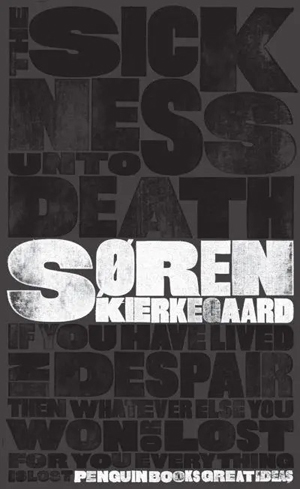
THE SICKNESS UNTO DEATH (1849) is widely regarded as one of the most profound and challenging works by Danish Lutheran theologian, poet, social critic and religious author, Søren Kierkegaard (5th May 1813–11th November 1855), who is considered to be the first existentialist philosopher of the Western world. With its title referencing the illness of Lazarus in the Gospel of John, this masterful tract is not, in fact, primarily about physical death as the name suggests but rather an exploration of psychological dread and spiritual despair, a theme which would go on to influence later existential thinkers such as Martin Heidegger, Jean-Paul Sartre and Albert Camus.
Kierkegaard’s great insight is the belief that a human being is not merely a body, a personality or a collection of societal roles: “The self is a relation which relates to itself,” he famously quipped. Moreover, he believed that we are a tension between opposites—finite and infinite, time and eternity, limitation and possibility—and suffering arises when this relationship is out of kilter and we flee from our natural true state. He went on to identify such a sickness in progressively increasing degrees of melancholia: unconscious despair (those who never ask who they truly are); the despair of weakness (those who shrink from the challenge of authentic existence); and defiant despair (those who refuse to depend on anything higher than themselves).
The solution, he also believed, is not through self-improvement or mental adjustment but found when the self humbly stands before the power that created us or, in other words, through individual surrender to God. Even if we do not share Kierkegaard’s Christian convictions, we can still find his premise extraordinarily insightful because it anticipates many modern existential preoccupations: problems with personal identity, feelings of emptiness despite success, the sense of living inauthentically, the struggle between responsibility and freedom to act as we please.
Interestingly, many nondual traditions, by contrast, suggest that suffering arises from identifying with a separate self in the first instance. For Kierkegaard, however, the goal is not the dissolution of individuality but the collapse of self-will, which is a little more nuanced perhaps than the absolutist position of an Advaita Vedanta practitioner or a Zen Buddhist monk! Indeed, It is one of those rare philosophical treatises, despite the abstruseness of the prose and tricky semantics, that can offer practical hope amidst the Sturm und Drang of contemporary life.
And when the hour-glass has run out, the hour-glass of temporality, when the worldly tumult is silenced and the restless or unavailing urgency comes to an end, when all about you is still as it is in eternity—whether you are man or woman, rich or poor, dependent or free, happy or unhappy; whether you bore in your elevation splendour of the crown or in humble obscurity only the toil and heat of the day; whether your name will be remembered for as long as the world lasts, and so will have been remembered as long as it lasted, or you are without a name and run namelessly with the numberless multitude; whether the glory that surrounded you surpassed all human description, or the severest and most ignominious human judgement was passed on you—eternity asks you, and every one of these millions of millions, just one thing: whether you have lived in despair or not, whether so in despair that you did not know that you were in despair, or in such a way that you bore this sickness concealed deep inside you as your gnawing secret, under your heart like the fruit of a sinful love, or in such a way that, a terror to others, you raged in despair. If then, if you have lived in despair, then whatever else you won or lost, for you everything is lost, eternity does not acknowledge you, it never knew you, or, still more dreadful, it knows you as you are known, it manacles you to your self in despair!
The human being is spirit. But what is spirit? Spirit is the self. But what is the self? The self is a relation which relates to itself, or that in the relation which is its relating to itself. The self is not the relation but the relation’s relating to itself. A human being is a synthesis of the infinite and the finite, of the temporal and the eternal, of freedom and necessity. In short a synthesis. A synthesis is a relation between two terms. Looked at in this way a human being is not yet a self.
In a relation between two things the relation is the third term in the form of a negative unity, and the two relate to the relation, and in the relation to that relation; this is what it is from the point of view of soul for soul and body to be in relation. If, on the other hand, the relation relates to itself, then this relation is the positive third, and this is the self.
… he not infrequently feels the need of solitude; it is a necessity of life for him, sometimes like breathing, sometimes like sleep. Now the fact that it is more of a necessity for him than for others is also a sign that he has a deeper nature. In general, the urge for solitude is a sign that there is after all spirit in a person and the measure of what spirit there is. So little do chattering nonentities and socializers feel the need for solitude that, like love-birds, if left alone for an instant they promptly die. As the little child must be lulled to sleep, so these need the soothing hushaby of social life to be able to eat, drink, sleep, pray, fall in love, etc. It isn’t only in the Middle Ages that people have been aware of this need for solitude, but also in antiquity there was respect for what it means; while in the never-ending sociality of our own day one shrinks from solitude to the point of not knowing to what use to put it except (oh! excellent epigram) the punishment of law-breakers. Yet it is true; in our own day it is indeed a crime to have spirit, so the fact that such people, the lovers are solitude, are put into the same category as criminals is just as it should be.
Post Notes
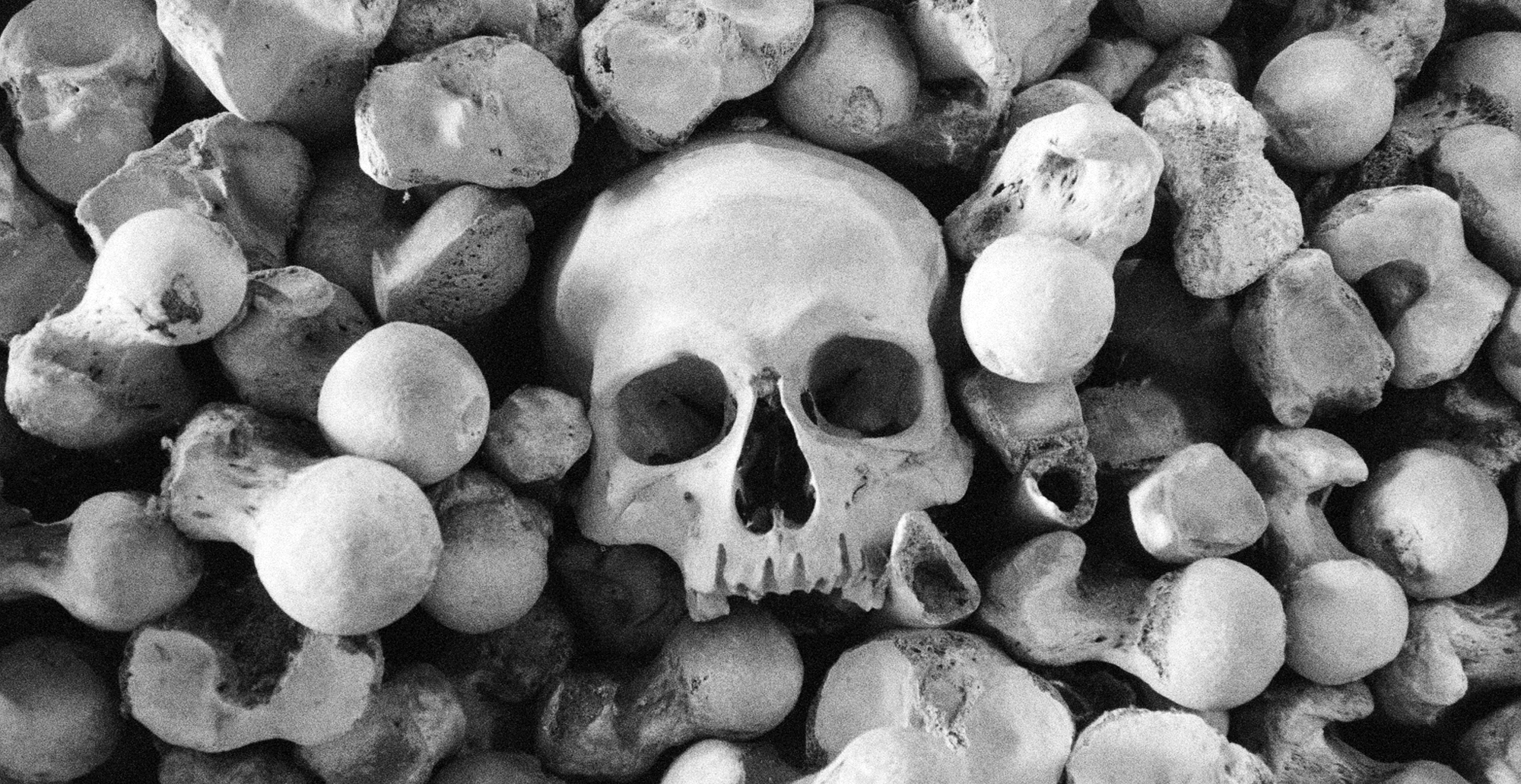
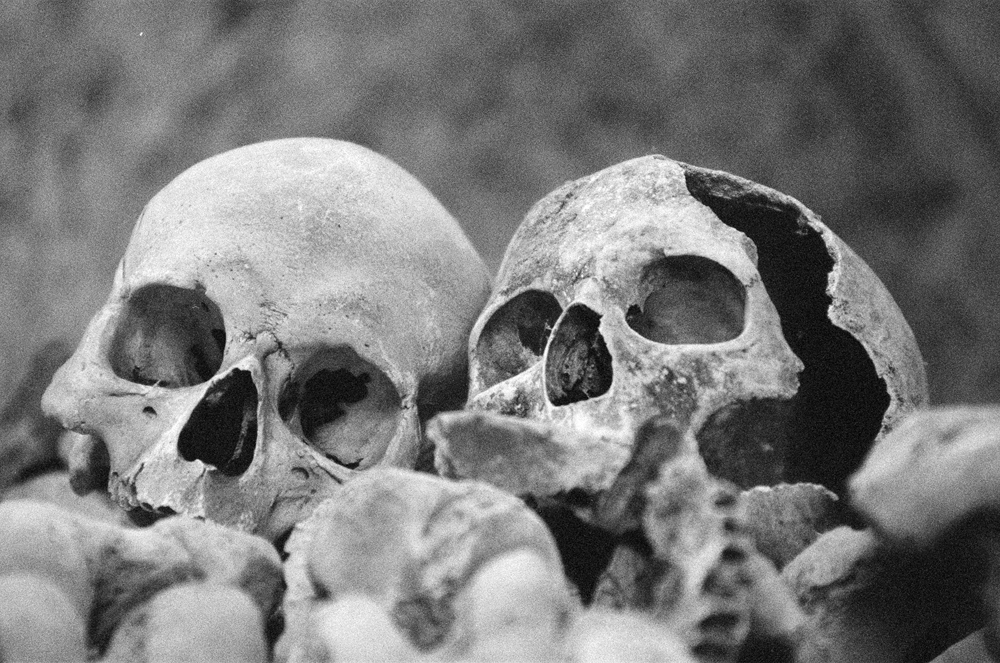
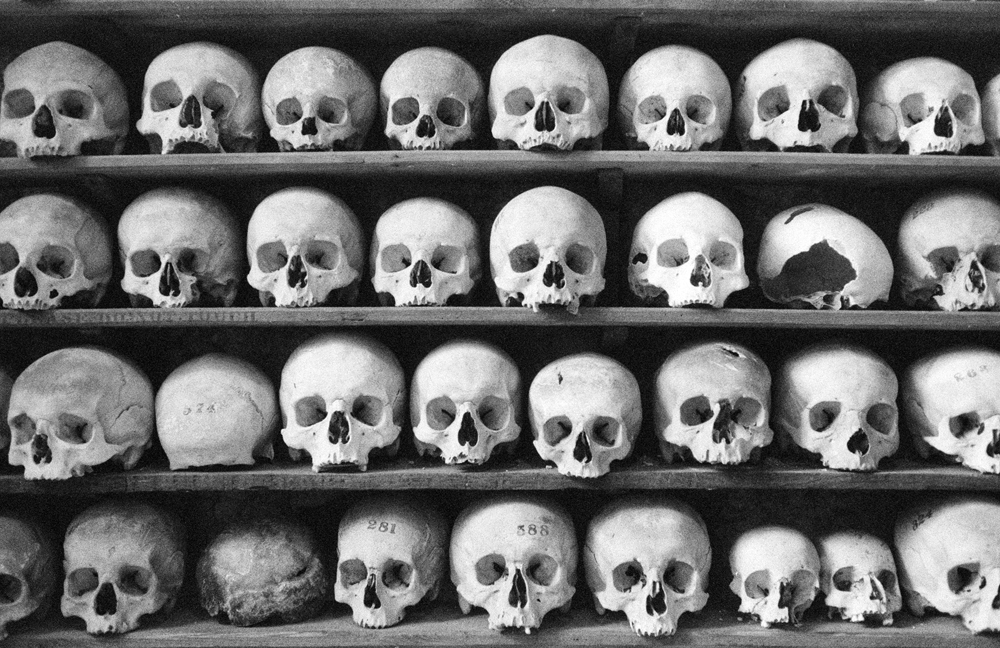
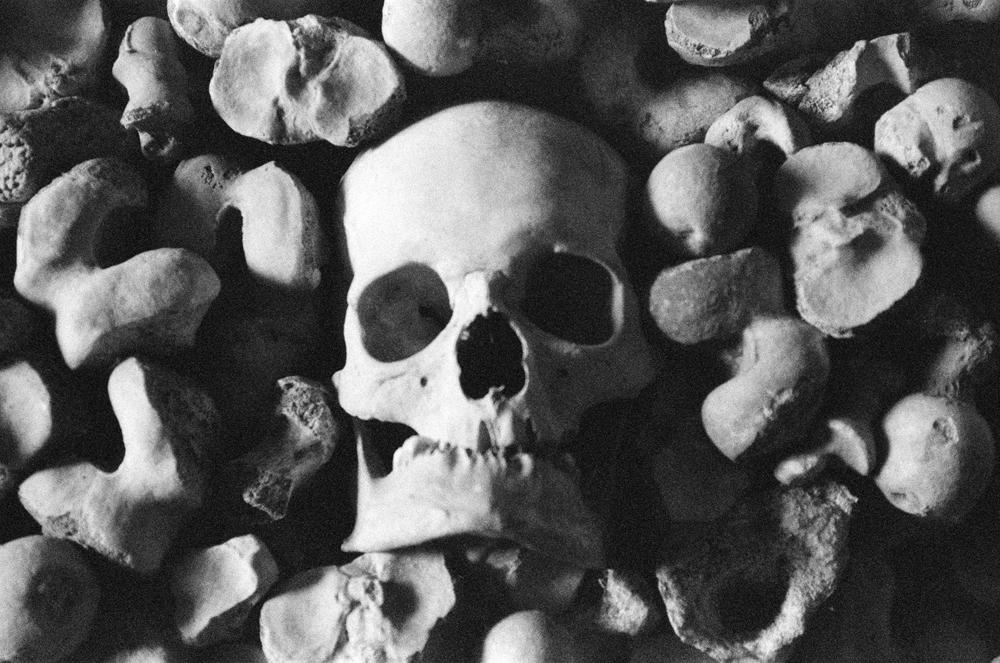
- Images: © Paula Marvelly, St Leonard’s Church Ossuary, Hythe
- St Leonard’s Church Ossuary, Hythe
- Plato: Phaedrus and the Charioteer
- Rousseau: Meditations of a Solitary Walker
- Michel de Montaigne: On Solitude
- Seneca: On Tranquillity of Mind
- Marsilio Ficino: Know Thyself
- Plotinus: Enneads
- The Culturium uses affiliate marketing links via the Amazon Associates Programme