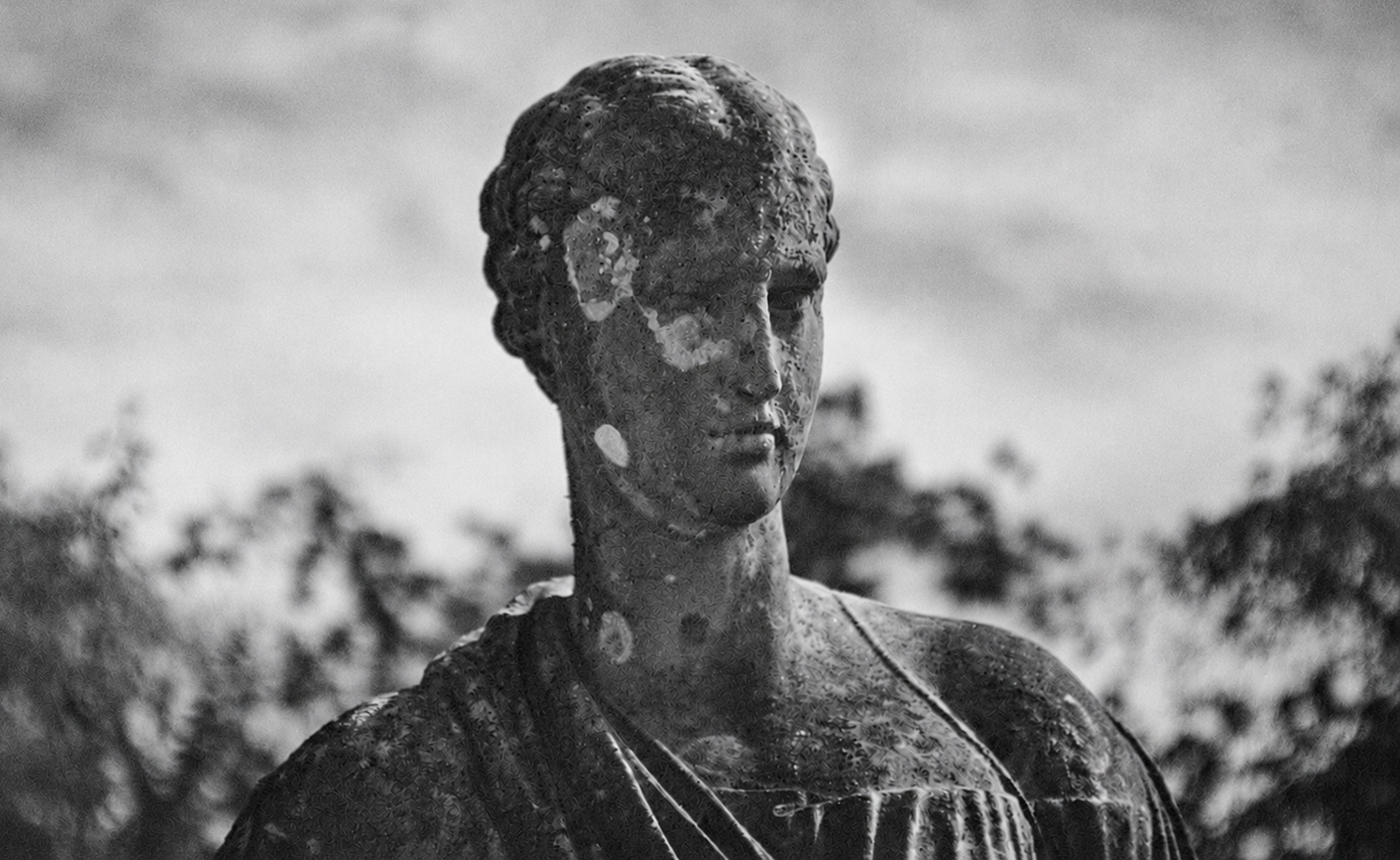
Testing Epictetus’s doctrines in a
laboratory of human behaviour
‘Station in life,’ then, can be changed from that of a dignified and competent gentleman of culture to that of a panic-stricken, sobbing, self-loathing wreck in a matter of minutes. So what? To live under the false pretence that you will forever have control of your station in life is to ride for a fall; you’re asking for disappointment. So make sure in your heart of hearts, in your inner self, that you treat your station in life with indifference, not with contempt, only with indifference.
LIKE MOST PEOPLE interested in spirituality, Richard Bach’s Jonathan Livingston Seagull—the charming little fable about a seagull who is dissatisfied with the normal business of being a bird—graces my bookshelf, the words of which I dip into once in a while. Bach was a pilot and flying was clearly much more than just a profession for him: it represented freedom, possibility and the desire to transcend the limitations of ordinary life. As the narrative unfolds, our feathered hero is eventually banished from his fellow colony and yet his exile becomes his making as well as forming the book’s principal belief, namely that the limitations we accept as inevitable are not quite as inevitable as we believe.
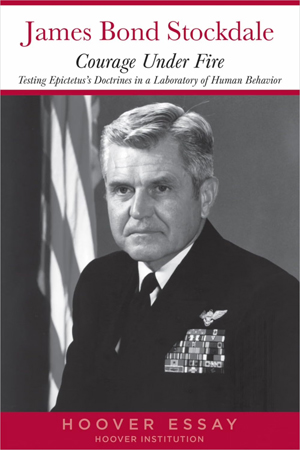
Another American fighter pilot, James Bond Stockdale (23rd December 1923–5th July 2005), also used his aviation skills to shape his literary occupation, though his relationship with flying could hardly have produced a more different result. Stockdale was shot down over North Vietnam in 1965 and spent eight years as a prisoner of war, much of that time at the infamous Hanoi Hilton gaol, with four years in solitary confinement.
His compelling book, Courage Under Fire: Testing Epictetus’s Doctrines in a Laboratory of Human Behaviour, a similarly slim volume published during his tenure as a senior research fellow at the Hoover Institution, is an extraordinary account of what happened when the freedom of his proverbial wings was savagely removed. And yet whereas Bach’s Jonathan discovers that his seagull flock cannot ultimately determine the limits of his existence, Stockdale discovers something far more devastating during his incarceration: that even when almost everything external has been taken from us, there remains an inner freedom that cannot be confiscated, let alone controlled.
Epictetus, whose philosophy Stockdale draws upon so profoundly, was himself born into slavery during the first century CE and eventually became known as one of the three great Stoic philosophers (alongside Seneca and Marcus Aurelius). He taught that we should distinguish rigorously between what is under our personal authority and what is decidedly not: other people’s behaviour, our reputation, our possessions, our bodies and all events that happen to us are, ultimately, not ours to command.
What does belong to us, however, is our judgement, our intentions and the way in which we respond to such external occurrences. It sounds almost painfully simple but Stockdale was blessed, if one can call it that, to discover firsthand that this Ancient Greek philosophy could literally become a means of mastering life and even death itself.
This is what makes Courage Under Fire so much more than a memoir of captivity. Stockdale describes his experience akin to a laboratory in which Epictetus’s philosophy is tested under the most unimaginable conditions a man can stand. Despite being tortured, isolated and repeatedly subjected to attempts to break his courage, he comes to understand that his captors can only control his circumstances without necessarily controlling his mind.
Stoicism in this context is not, therefore, about becoming emotionless or pretending that suffering does not exist. Rather, it is about refusing to compound suffering with the idea that we must surrender our inner sovereignty to whatever comes to pass. The distinction is absolutely crucial: bravery does not mean being invulnerable; it means recognizing where our freedom actually lies.
And so in their own ways, the rather unlikely paths of a fictional seagull, an ancient Greek philosopher and an American naval officer all converge. Different stories within different contexts but the same rather magnificent standpoint: there may be more freedom available to us than our circumstances would have us believe.
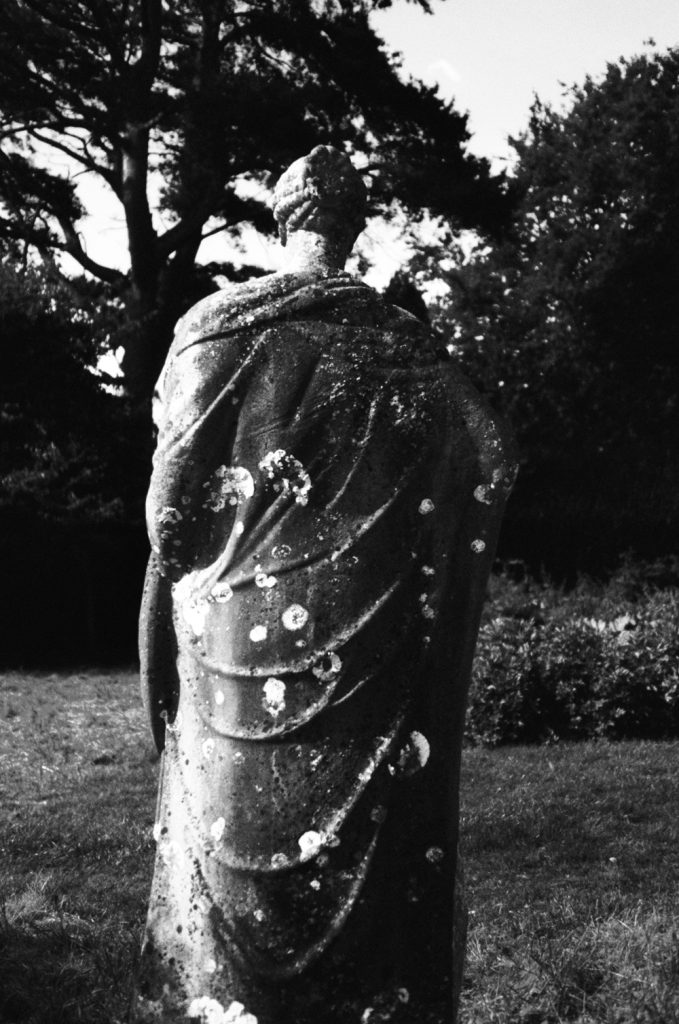
In his inimitable, frank language, Epictetus explained that his curriculum was not about ‘revenues or income, or peace or war, but about happiness and unhappiness, success and failure, slavery and freedom.’ His model graduate was not a person ‘able to speak fluently about philosophic principles as an idle babbler, but about things that will do you good if your child dies, or your brother dies, or if you must die or be tortured.’ ‘Let others practise lawsuits, others study problems, others syllogisms; here you practise how to die, how to be enchained, how to be racked, how to be exiled.’ A man is responsible for his own ‘judgements, even in dreams, in drunkenness, and in melancholy madness.’ Each individual brings about his own good and his own evil, his good fortune, his ill fortune, his happiness, and his wretchedness. And to top all this off, he held that it is unthinkable that one’s man error could cause another’s suffering. Suffering, like everything else in Stoicism, was all down here—remorse at destroying yourself.
So what Epictetus was telling his students was that there can be no such thing as being the ‘victim’ of another. You can only be a ‘victim’ of yourself. It’s all in how you discipline your mind. Who is your master? ‘He who has authority over any of the things on which you have set your heart.’ ‘What is the result at which all virtue aims? Serenity.’ ‘Show me a man who though sick is happy, who though in danger is happy, who though in prison is happy, and I’ll show you a Stoic.’
- Images: © Paula Marvelly, Farleys
- Marcus Aurelius: Meditations
- Plato: Phaedrus and the Charioteer
- Rousseau: Meditations of a Solitary Walker
- Michel de Montaigne: On Solitude
- Seneca: On Tranquillity of Mind
- Marsilio Ficino: Know Thyself
- Plotinus: Enneads
- The Culturium uses affiliate marketing links via the Amazon Associates Programme